
Roof Leak & Water Damage Repair Oahu
Synthetic Roof Underlayment Hawaii Guide - Copy
What Causes Roof Leaks in Hawaii?
1. Failed Flashings and Penetrations
2. Extreme UV Degradation & Granule Loss
3. Wind-Driven "Sideways" Rain
Recognizing Water Damage Before It Spreads
The Cost of Waiting: Why Speed Matters in the 808
How Professional Inspections Work (The FBC Method)
Navigating Insurance Claims for Roof Damage
Repair Options: Targeted Fixes vs. Full Protection
Roof Water Damage: Identifying and Fixing Leaks in Hawaii’s Humid Climate
A ceiling stain that appears overnight. A musty smell in your hallway. Dark streaks running down your bedroom wall. In the islands, these aren't just cosmetic nuisances—they are urgent warning signs that your home’s "Foundation of Life" has been breached.
In Hawaii’s unique tropical environment, a minor leak doesn't stay minor for long. What starts as a small drip can develop into toxic mold growth within 24–48 hours. Left unchecked, moisture leads to structural wood rot, compromised electrical systems, and five-figure repair bills. This comprehensive guide, provided by FBC Roofing & Exteriors, walks you through identifying damage early, understanding "808-specific" repair options, and navigating the insurance process to protect your investment.
What Causes Roof Leaks in Hawaii?
Hawaii's climate is uniquely aggressive toward residential and commercial roofing materials. While a roof in a dry mainland state might last 30 years, an Oahu roof faces a constant, three-pronged assault that accelerates deterioration.
1. Failed Flashings and Penetrations
Roof penetrations—including chimneys, attic vents, plumbing stacks, and skylights—account for 35–40% of all residential leaks. These areas rely on metal flashing to divert water. However, coastal properties in neighborhoods like Ewa Beach, Hawaii Kai, or the North Shore face accelerated corrosion. Salt-laden trade winds degrade standard metal flashing 3–5 times faster than inland locations, leading to "pinhole" leaks that are nearly invisible to the untrained eye.
2. Extreme UV Degradation & Granule Loss
Hawaii’s UV index regularly reaches "Extreme" levels (11–12+). This high-intensity radiation bakes the essential asphalt oils out of your shingles, causing them to become brittle and shrink. Once the shingles lose their flexibility, they shed their protective ceramic granules. If you see "sand" in your Gutter System, your shingles have lost their armor, leaving the raw asphalt exposed to melt and crack under the sun.
3. Wind-Driven "Sideways" Rain
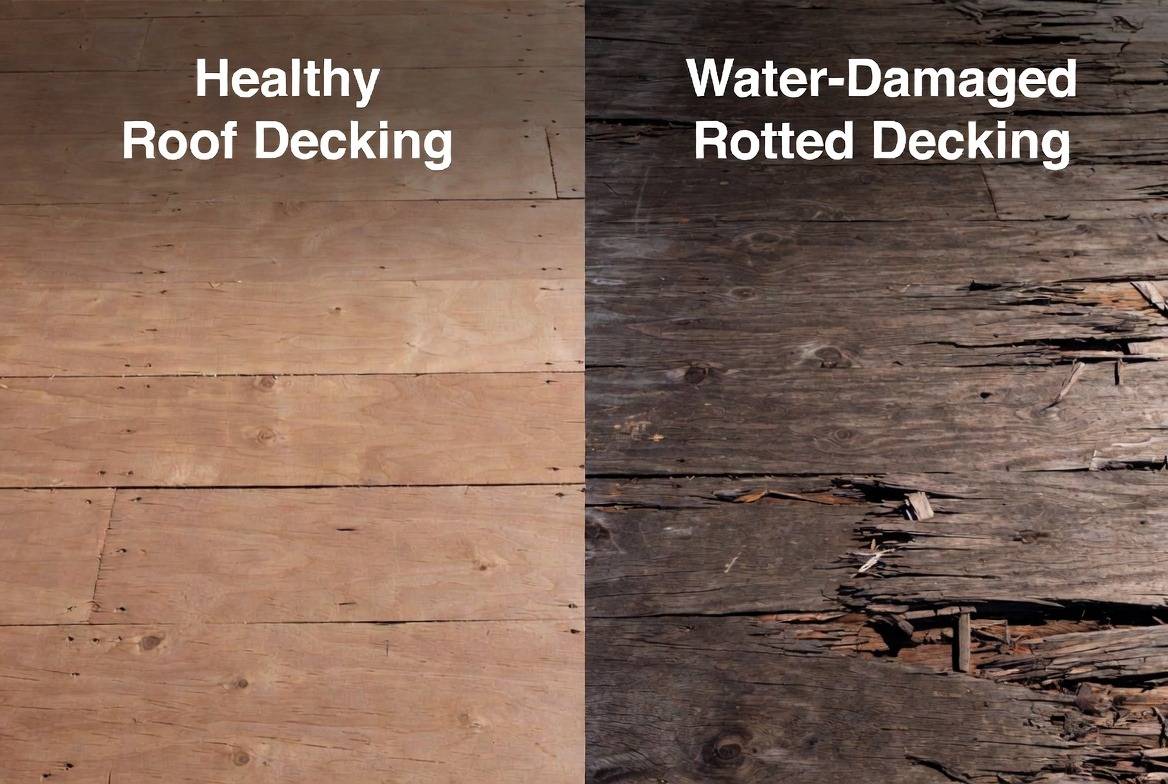
During Kona storms or tropical depressions, rain doesn't fall vertically—it falls horizontally. High-velocity winds can drive water upward and under shingle tabs, bypassing standard gravity-based drainage. If your roof was installed with old-fashioned felt paper rather than modern Synthetic Underlayment, this wind-driven moisture will saturate your roof deck immediately, causing the wood to swell and rot.
Recognizing Water Damage Before It Spreads
Early detection is the key to avoiding a full roof replacement. You don't always need to climb a ladder to know you have a problem; you just need to know where to look.
Internal Red Flags
The "Yellow Ring" Effect: Circular, tea-colored stains on the ceiling indicate active intrusion. Even if the spot is dry to the touch, it means water is pooling on top of your drywall.
Bubbling Wall Paint: If paint near the ceiling or baseboards is blistering, moisture is likely trapped inside the wall cavity, potentially rotting your studs.
The Attic "Sniff Test": A persistent musty or earthy smell in the attic is a primary indicator of mold colonization.
External Red Flags
Curled or Lifted Shingles: Shingles that "claw" upward have lost their adhesive seal and are prime targets for the next high-wind event.
Rusted Flashing: Orange or red streaks around roof vents indicate that the metal has reached its "end of life" and is no longer watertight.
Sagging Rooflines: Visible "dips" in the roof surface suggest that the underlying plywood (decking) has become saturated and soft.
Technical Pro-Tip: Water rarely drips straight down. Due to the pitch of your roof, a leak often travels 10–20 feet along a rafter or a nail line before finally dripping onto your ceiling. This is why DIY repairs fail so often—the "patch" is rarely placed over the actual entry point.
The Cost of Waiting: Why Speed Matters in the 808
In Hawaii’s 70–80% average humidity, a roof leak acts as a catalyst for secondary damage. The "Cost of Waiting" is not linear; it compounds every time a trade wind shower passes over your home.
Pricing Disclaimer: Estimates are based on 2026 Oahu market rates. Costs in Hawaii typically run 15–25% higher than mainland averages due to Jones Act shipping logistics for specialized materials and local labor rates. A professional inspection is required for an exact quote.
How Professional Inspections Work (The FBC Method)
Diagnosis is the most critical part of a roof repair. As a GAF Master Elite Contractor, FBC Hawaii uses a systematic grid-based assessment to find the "hidden" leak.
Infrared Moisture Mapping: We use thermal imaging to detect temperature differentials. Wet insulation is colder than dry insulation, allowing us to see moisture through your ceiling without cutting holes.
Structural Deck Check: We physically inspect the roof deck for "soft spots" to ensure the wooden structure can still hold the weight of the roofing system.
Flashing Integrity Test: We check the seals around every vent and chimney using specialized probes to find the microscopic cracks caused by Hawaii’s intense UV rays.
Professional documentation is essential for Insurance Claims. Our reports include high-resolution photos and moisture readings that adjusters need to approve payouts. In fact, professional reports get claims approved 3x faster than homeowner submissions alone.
Navigating Insurance Claims for Roof Damage
Many Oahu homeowners are unaware that storm-related water damage is often a covered peril under their homeowners insurance policy. However, the window to file is often limited.
Sudden vs. Gradual: Insurance covers "sudden and accidental" damage, such as a Kona storm ripping off shingles or a fallen Monkeypod branch puncturing the roof. It generally does not cover "deferred maintenance" (leaks caused by a 30-year-old roof that should have been replaced years ago).
Documenting the Event: After a high-wind or heavy rain event, it is vital to have a professional inspection immediately. We provide the "Proof of Loss" required by carriers to distinguish new storm damage from old wear and tear.
Repair Options: Targeted Fixes vs. Full Protection
Depending on the health of your overall system, we generally recommend one of three paths:
The "Leak Stop" Repair: Best for roofs under 10 years old. We replace damaged shingles and reseal all penetrations using marine-grade polyurethane (which lasts 4x longer than standard silicone).
Area Re-Roofing: If an overhanging tree limb damaged one specific "facet" of your roof, we can perform a partial replacement that matches your existing shingles.
The "Foundation of Life" System: If the roof is over 15 years old and leaking in multiple spots, a full replacement with a 7-year workmanship warranty is the most cost-effective long-term move.
Emergency Tarping Services
If your roof is actively leaking during a storm, FBC Hawaii provides Emergency Tarping. We secure heavy-duty, UV-rated tarps using wood battens (not just bricks) to stop the water intrusion until a permanent repair can be made safely.
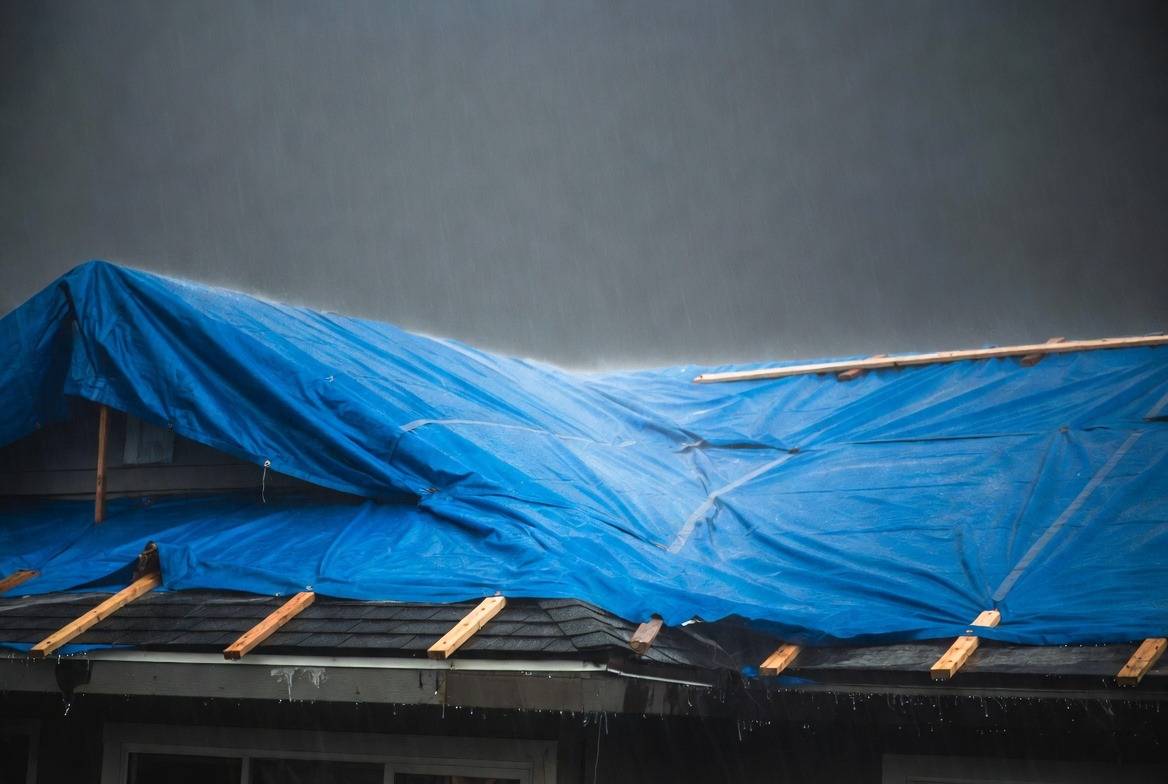
Professionally tarped roof secured with wood battens
Work You Can Trust: The FBC Standard
Since 2014, we have treated every Oahu home as if it were protecting our own family. Our status as a GAF Master Elite contractor—a title held by less than 2% of roofers—guarantees that we use the highest-quality materials and most rigorous installation standards in the industry.
"I hired FBC Roofing for a shingle roof on my house and was impressed with the whole process. From the first phone call to the final walk‑through, everything was smooth and professional. The crew arrived on time, explained the shingle roofing options clearly, and kept the work site clean. The new roof looks great and the installation was quick and hassle free. I appreciated the friendly communication and the careful attention to detail. I would definitely recommend FBC Roofing for any residential roofing or roof repair needs.." — Verified Review via Google
Roof Leak FAQ
1. Is it okay to just paint over a ceiling stain? Absolutely not. A stain is a sign of trapped moisture. Painting over it hides the symptom while the mold and wood rot continue to spread in the dark space above your ceiling.
2. Why does my roof leak only when the wind blows from the South (Kona Winds)? Standard Hawaii roofs are designed for North-East Trade Winds. When a Kona storm hits, the rain is driven into the "weak points" of your flashing. This usually means your starter shingles or flashing seals are failing.
3. Does FBC Hawaii offer free roof inspections? Yes. We provide Free, No-Obligation Roof & Gutter Inspections across all of Oahu.
4. How long does a typical roof repair take? Most minor to moderate leak repairs are completed in one business day, ensuring your home is sealed before the afternoon showers return.
5. Can I fix a leak with "roof cement" from the hardware store? Roof cement is a temporary patch that often cracks within months under Hawaii's sun. For a permanent fix, the damaged shingles must be replaced and the underlying Underlayment must be resealed.
Don't Wait for the Next Tropical Storm
If you’ve spotted a ceiling stain or smelled a musty odor, the damage is already happening. At FBC Hawaii, we diagnose the root cause—not just the symptoms—ensuring your home stays dry for the next 20+ years.




contact us
3050 Ualena St Unit D
Honolulu, HI 96819
Hours of operation
Monday - Friday: 9 a.m. to 6 p.m.
Saturday - Sunday: Closed