
Hawaii Hurricane Roof Readiness Guide
Hawaii Hurricane Roof Readiness Guide
Step 1: Perform a "Ground-Level" and Interior Visual Inspection
Step 2: Clear the "Launch Pads" (Gutters & Overhanging Limbs)
Step 3: Verify Your "Continuous Load Path" (Hurricane Clips)
Step 4: Audit Your Attic Ventilation System
Step 5: Document Everything for Insurance (The "Before" Proof)
Why Hawaii Roof Preparation is Different than the Mainland
Countdown to June 1st: The Ultimate 5-Step Hawaii Roof Readiness Checklist
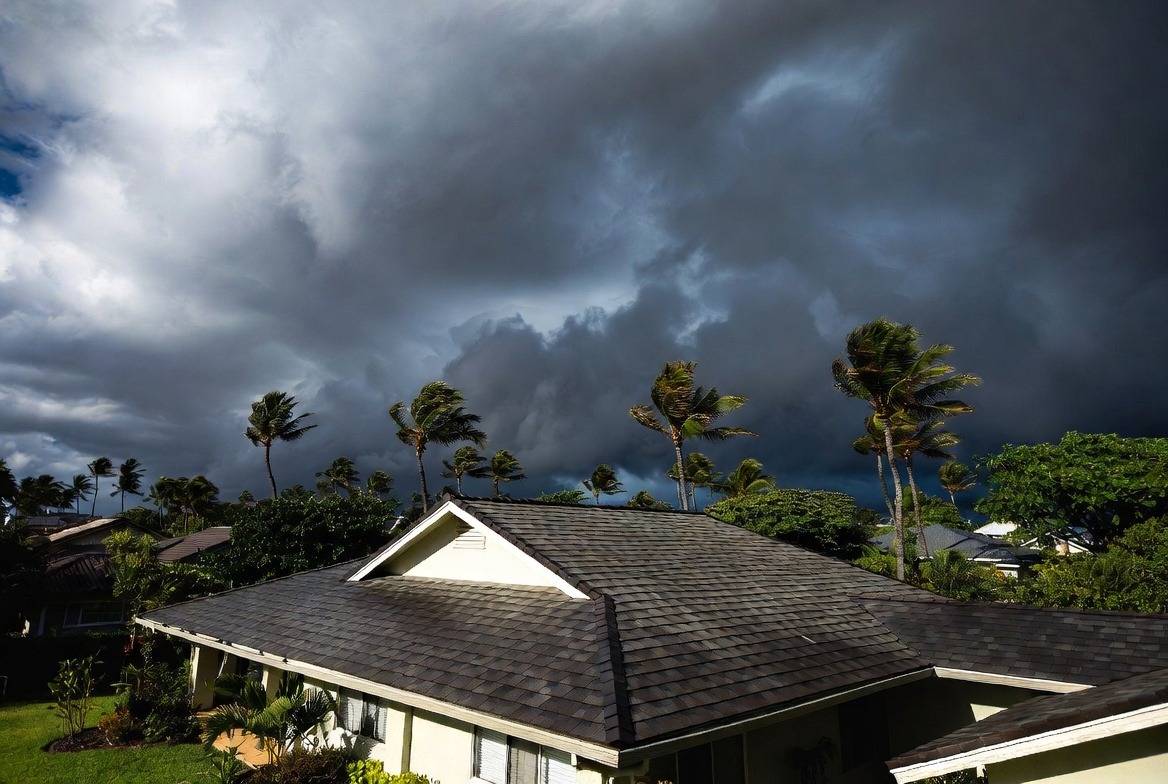
In Hawaii, June 1st isn’t just the start of summer—it’s the official kickoff of the Central Pacific Hurricane Season. While we all hope for a quiet year, the 2026 climate forecasts remind us that it only takes one "Kona Low" or tropical cyclone to test the structural integrity of your property. In our isolated island chain, your roof is more than just a cover; it is the primary shield for your home’s "Foundation of Life."
Your roof is the most vulnerable component of your house during a high-wind event. If the roof envelope is breached, the internal pressure of the home can change instantly, leading to catastrophic wall failure or a total structural collapse. Since FBC Hawaii was established in 2014, we’ve seen how a few hours of proactive preparation in May can save Oahu homeowners tens of thousands of dollars in June. This 1,200+ word guide serves as your professional-grade readiness plan.
Step 1: Perform a "Ground-Level" and Interior Visual Inspection
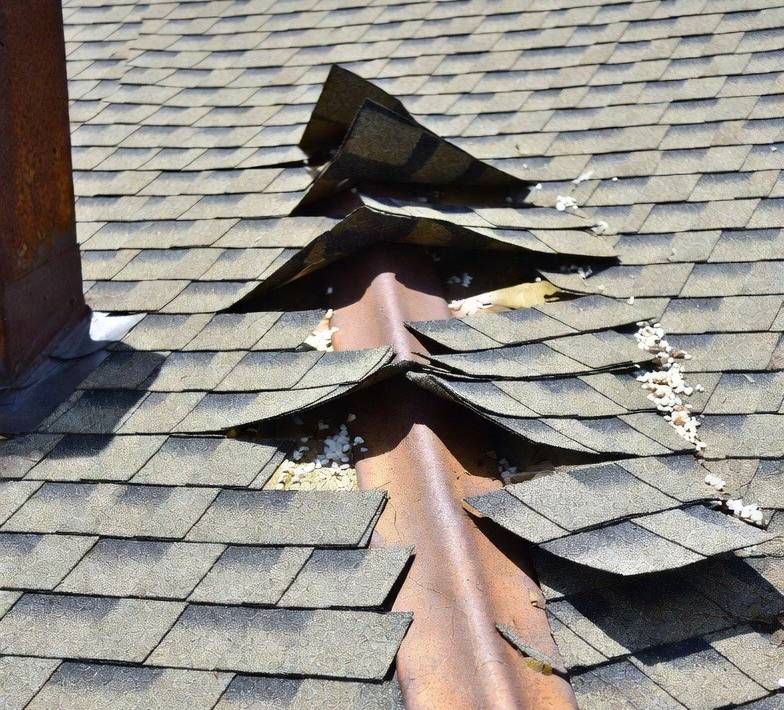
You don't need to be a GAF Master Elite contractor to spot the obvious warning signs of roof fatigue. However, you do need to know exactly where the "weak links" are. In the 808 climate, shingles and tiles face extreme UV radiation that makes them brittle.
The Binocular Walk-Around
Grab a pair of binoculars and walk the perimeter of your home. You are looking for "Wind Entry Points." Look for:
Lifting or Curling Shingles: If a shingle tab is even slightly lifted, it creates a "wing" that a 50mph gust can easily catch. Once one shingle peels, the ones behind it follow like a zipper.
Missing Shingles or Tiles: Any exposed roof deck (the plywood) is a direct entry point for wind-driven rain.
Granule "Sand" in the Gutters: If you see piles of pebbles in your Gutter System, your shingles have lost their mineral armor. Brittle shingles crack instantly under the pressure of flying debris.
Rusted Flashing: Inspect the metal "boots" around your plumbing stacks and the metal in the valleys. If it’s orange and pitted from salt air, it will likely fail during the first heavy downpour of the season.
The Attic "Light Test"
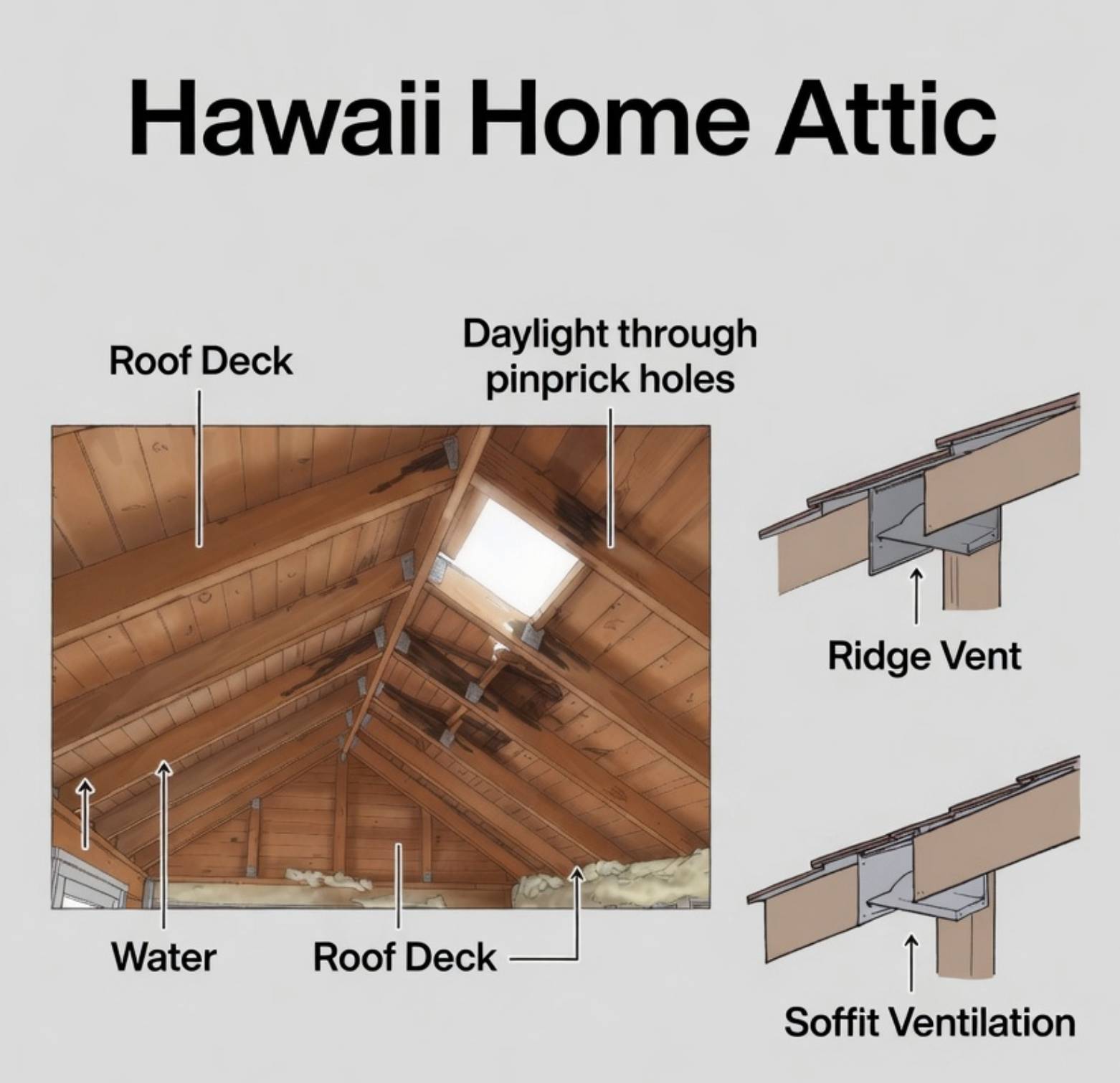
On a bright May afternoon, head into your attic with the lights off. If you see any pinpricks of daylight coming through the roof deck, you have a problem. If light can get in, wind-driven rain will get in. Check for water stains on the rafters or damp, compressed insulation. In Hawaii’s 80% humidity, a small leak in May becomes a major toxic mold colony by the time the peak of the storm season hits in August.
Step 2: Clear the "Launch Pads" (Gutters & Overhanging Limbs)
During a tropical storm or hurricane, loose debris becomes a projectile. What looks like a harmless tree branch today can become a battering ram in 75mph sustained gusts.
Defensive Tree Trimming
Ensure all tree branches are trimmed back at least 6 to 10 feet away from your roofline. This is especially critical for heavy-fruiting trees like Mango or dense Monkeypods. Constant rubbing of branches on shingles acts like sandpaper, stripping away the UV granules. In a storm, these limbs snap and can puncture your roof deck, creating an immediate emergency.
The Gutter Weight Factor
A clogged gutter is essentially a 200-to-400-pound weight hanging off your eaves. When a gutter is filled with wet leaves and tropical sludge, and then hit with a 4-inch-per-hour rain event, the weight can pull the Fascia Boards right off your rafters.
Flush the Downspouts: Ensure water moves away from your foundation.
Secure the Hangers: If your gutters feel "wobbly," have a professional add high-wind hangers every 16 inches to ensure the system stays attached to the house during high-velocity winds.
Step 3: Verify Your "Continuous Load Path" (Hurricane Clips)
In Hawaii, our building codes are among the strictest in the world regarding wind uplift. Your roof needs to be physically "tied" to your walls, and those walls tied to your foundation. This is known as a Continuous Load Path.
Understanding Hurricane Clips
If your home was built before the mid-1990s, your roof may only be held down by "toenails" (nails driven at an angle through the rafter into the wall). In a hurricane, the wind creates "uplift" (the same force that lifts an airplane wing). Without metal clips, the entire roof can lift off the house.
Inspection: Look at the joint where your roof rafters meet the top of your exterior walls. You should see galvanized or stainless steel straps (Hurricane Clips).
The Coastal Corrosion Threat: If you live in Ewa Beach, Kailua, or any coastal area, standard galvanized clips can rust through in as little as 10 years. If your clips are orange or crumbling, they will not hold. FBC Hawaii specializes in retrofitting homes with 316-Grade Stainless Steel connectors, which are the only materials that truly survive the salt-air environment.
Step 4: Audit Your Attic Ventilation System
It sounds counter-intuitive, but your attic ventilation plays a massive role in how your roof survives a storm.
Heat Pressure and Shingle Adhesion
In May, the Hawaii sun is already intense. If your attic isn't properly vented, the heat builds up to 150°F+, which "cooks" the adhesive seal on your shingles. When shingles get too hot, the "seal strips" that bond them together can fail.
Soffit Check: Ensure your Soffit Vents aren't blocked by insulation or bird nests.
Intake and Exhaust: You need a balanced system of intake (at the eaves) and exhaust (at the ridge). A cool roof is a strong roof. Shingles that stay within their intended temperature range maintain their flexibility and wind-resistance ratings far longer than those on unventilated homes.
Step 5: Document Everything for Insurance (The "Before" Proof)
If a storm does hit Oahu, the difference between a fast insurance payout and a 12-month legal battle is documentation.
Create a "Digital Vault"
Take high-resolution photos and videos of your roof from the ground and, if safe, from a ladder today.
Prove the Condition: If a storm rips off shingles in July, you need to prove they were in good condition in May. Insurance adjusters often try to claim "deferred maintenance" to avoid paying for a full replacement.
Professional Certification: A certified inspection report from an Oahu-based Master Elite Contractor carries massive weight with insurance adjusters. We provide a documented digital report that establishes a "baseline" for your roof’s health. If a covered event occurs, you have the expert evidence needed to fast-track your claim.
Why Hawaii Roof Preparation is Different than the Mainland
Many "storm chasers" from the mainland fly into Hawaii after a disaster, but they don't understand the 808 High-Wind Zone specifications required by our local building codes.
The "25% Rule" Warning
According to the Hawaii State Building Code, if more than 25% of a roof is damaged during a storm, the entire roof must often be replaced and brought up to the latest 2026 codes. This is why "hardening" your roof in May is a smart financial investment—it prevents minor damage from triggering a mandatory (and expensive) full replacement.
Work You Can Trust: The FBC Hawaii Guarantee
Since 2014, FBC Hawaii has protected over 1,000 homes across Oahu. We aren't just contractors; we are your neighbors. We understand that a roof in the rainy Manoa valley needs different treatment than one in the scorching Ewa Plain. Our reputation is built on the fact that our roofs stay put when the sirens start.
"FBC inspected our roof in May and found three loose panels and rotted fascia we didn't know about. They fixed it in a day. When the August storms hit, we were the only ones on the block without a leak." — Verified Review via Google
Hurricane Readiness FAQ
1. When is the absolute best time to fix my roof for hurricane season? Right now (May). Once the season starts on June 1st, local contractors become backlogged with emergency calls. Repairing in May ensures your sealants have time to "sun-cure" and create a permanent bond before the first high-wind event.
2. Are "Hurricane Clips" a legal requirement? For new builds and major re-roofs, yes. For older homes, they are a recommended safety upgrade that can significantly lower your Homeowners Insurance premiums.
3. Do shingles really have "Wind Warranties"? Yes. For example, GAF Timberline HDZ® shingles, when installed by a Master Elite contractor like FBC, come with a WindProven™ Limited Wind Warranty that has no maximum wind speed limitation—but only if installed to specific factory standards.
4. Can I just use a tarp if it leaks during a storm? Tarps are a temporary "emergency only" measure. In 50mph winds, a poorly secured tarp can act as a parachute and pull more shingles off your house. It is much safer and cheaper to be watertight before the wind starts.
5. Does FBC provide emergency storm services? Yes. We offer 24/7 Emergency Tarping and Repairs for our Oahu neighbors, but our primary goal is to prevent the leak from happening in the first place through proper May maintenance.
Don't Wait for the Sirens—Schedule Your Inspection Today
The countdown to June 1st has begun. Don't leave your family’s safety to chance. Ensure your home's "Foundation of Life" is ready to stand strong against whatever the 2026 season brings.