
Oahu Microclimate Roofing Guide | FBC
Oahu Microclimate Roofing Guide | FBC
The Leeward Heat: Kapolei, Ewa Beach, and Makaha
The Valley Moisture: Manoa, Nu'uanu, and Palolo
Oahu Microclimate Comparison Table
The Windward Coast: Kailua, Kaneohe, and Laie
The "Vog" and Volcanic Ash Considerations
Why a "One Size Fits All" Approach Fails on Oahu
From Manoa to Kapolei: How Oahu’s Microclimates Change Your Roofing Needs
Oahu is often celebrated as a "microclimate paradise." Within a single twenty-minute drive along the H-1 or H-3, you can transition from the parched, sun-scorched plains of Kapolei to the lush, rainforest-like conditions of Manoa Valley. While this geographic diversity makes the island a beautiful place to live, it creates a massive, often invisible challenge for homeowners. A roof that performs perfectly in the dry, stagnant heat of the Leeward side may fail prematurely in the humid, salt-saturated air of the Windward coast or the acidic mists of a deep valley.
Since FBC Hawaii was established in 2014, we have seen firsthand how local geography dictates the lifespan of a residential roof. Understanding your specific microclimate is the first step in choosing the right materials, installation techniques, and maintenance schedules. Whether you are dealing with volcanic "Vog," heavy trade wind rains, or extreme UV exposure, your roofing strategy must be tailored to your specific zip code. In Hawaii, a "one-size-fits-all" approach isn't just inefficient—it’s expensive.
The Leeward Heat: Kapolei, Ewa Beach, and Makaha
The Leeward side of Oahu is characterized by intense, direct sunlight and significantly higher average daily temperatures than the rest of the island. In areas like Kapolei and the Ewa Plain, the primary enemy of your roof isn't moisture—it’s UV Degradation and Thermal Expansion.
The Impact of Extreme UV and Heat
Constant sun exposure causes asphalt shingles to undergo a process called "thermal shock." During a typical Hawaii afternoon, the roof surface can reach temperatures exceeding 160°F. When the sun sets, or a sudden, brief afternoon shower hits, the rapid cooling causes the materials to contract. Over time, this results in:
Granule Loss: The protective ceramic-coated "sand" on your shingles falls off, leaving the asphalt mat exposed to the sun.
Curling and Brittleness: Shingles become "crispy" and can crack under the slightest pressure, such as a technician walking on the roof for a Roof Inspection.
Adhesive Failure: The seal strips that hold shingles down during high winds can bake until they become brittle, losing their grip.
The Solution: Solar-Reflective Technology
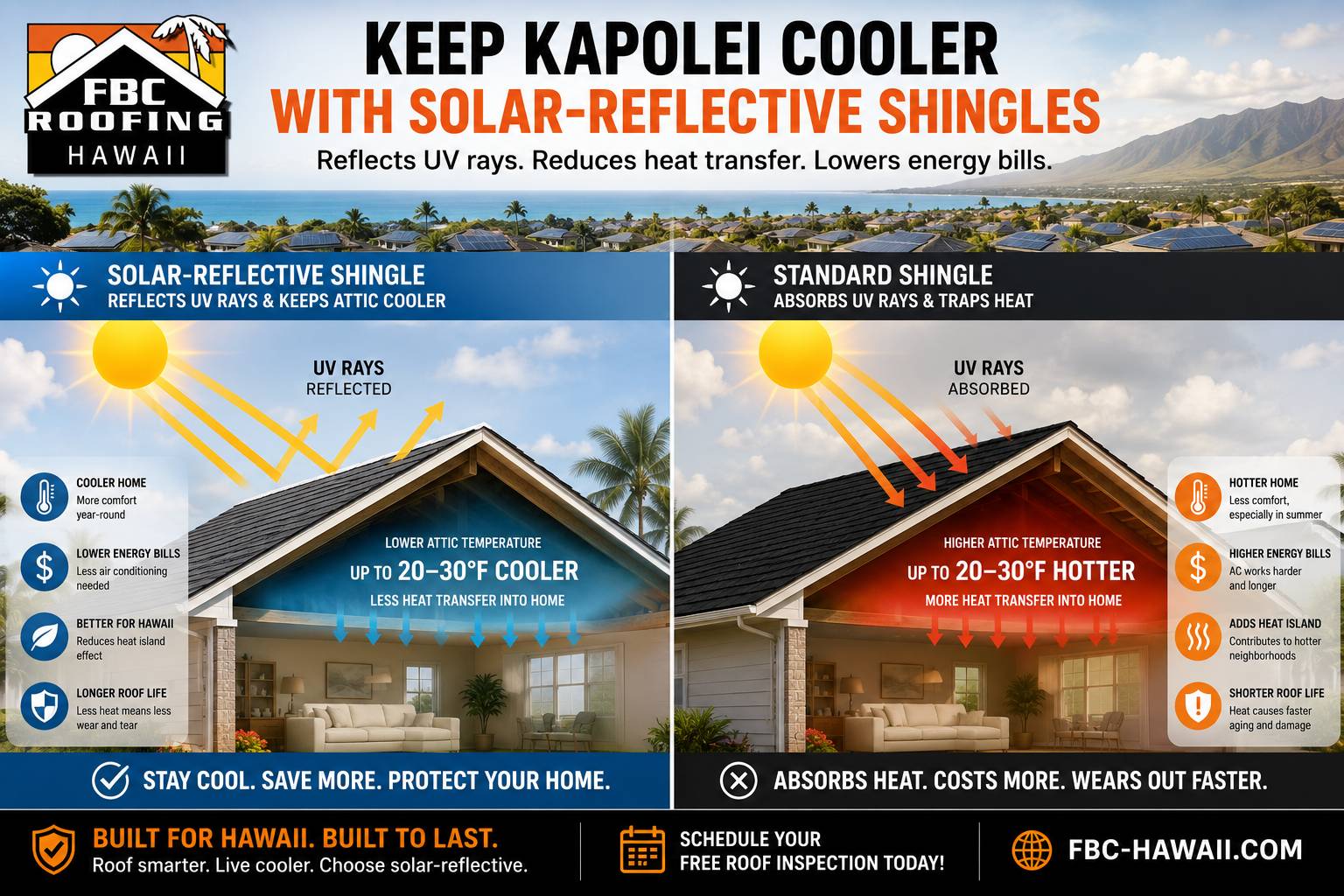
For Leeward homeowners, we prioritize Roof Replacement materials that feature high solar-reflectance (often called "Cool Roofs"). These shingles are engineered with specialized granules that reflect infrared radiation rather than absorbing it. This keeps the attic cooler and significantly reduces the strain on your AC system. Additionally, ensuring your Siding Services address any warped or heat-damaged panels is vital for maintaining your home's total thermal "envelope."
The Valley Moisture: Manoa, Nu'uanu, and Palolo
If Kapolei is an oven, Manoa is a greenhouse. The deep, steep valleys of Oahu trap moisture and clouds, leading to frequent morning "blessing" showers and high humidity levels that rarely drop. Here, the primary threat is Biological Growth and Organic Decay.
Moss, Algae, and Lichen: The Silent Rot
In the valleys, roofs often stay damp for hours—or even days—after the sun comes up. This creates the perfect breeding ground for Gloeocapsa magma, the black algae that causes those unsightly dark streaks on rooftops.
Structural Decay: Moss traps moisture directly against the shingle and underlayment, which can eventually lead to wood rot in the underlying plywood deck.
Debris Accumulation: Valley homes are often surrounded by lush tropical foliage. This means Gutter Cleanouts are required more frequently here than anywhere else on the island to prevent water from backing up into the eaves.
Fascia Damage: Constant dampness in the shade leads to rapid wood rot. Checking your Soffit & Fascia is critical during every rainy season.
The Solution: Zinc and Copper Granules
Valley homes benefit most from high-quality shingles with built-in algae resistance. These shingles contain copper or zinc particles that slowly release metal ions when it rains, chemically killing algae spores before they can take root. At FBC Hawaii, we also focus heavily on maximizing ventilation to move that trapped humid air out of the attic space as quickly as possible, preventing mold growth from the inside out.
Oahu Microclimate Comparison Table
The Windward Coast: Kailua, Kaneohe, and Laie
Living on the Windward side means dealing with the constant push of the Trade Winds and persistent salt air. This microclimate is perhaps the most aggressive on building materials because it combines high moisture with corrosive sodium chloride.
The Salt Air Factor and Wind Uplift
As discussed in our Coastal Metal Roofs Guide, salt air acts as a catalyst for rust. Even if you aren't "oceanfront," the salt spray can travel miles inland on the Windward side, carried by the trades.
Fastener Failure: Standard roofing nails can rust away inside the wood, leaving your shingles vulnerable to being peeled back like a banana skin by the next 50mph gust.
Metal Corrosion: Flashings around chimneys and skylights are often the first things to fail, leading to the need for immediate Roof Leak Repair.
Gutter Degradation: Salt sitting in stagnant gutter water can eat through aluminum troughs. Proactive Gutter Repair is essential to prevent fascia rot.
The Solution: Stainless Steel and High-Wind Fastening
For Windward homes, FBC Hawaii utilizes an enhanced "High-Wind" nailing pattern. Instead of the standard four nails per shingle, we use six specialized fasteners, ensuring they are driven into the "common bond" area for maximum pull-through resistance. We also recommend Gutter Leaf Protection to prevent salt-laden leaves from sitting against your roofline.
The "Vog" and Volcanic Ash Considerations
While not as common as it used to be during active eruptions, volcanic emissions (Vog) from the Big Island can still drift over to Oahu, particularly during "Kona Weather" patterns when the winds flip. Vog contains sulfur dioxide, which, when mixed with rain or heavy dew, creates a mild sulfuric acid.
Acid Rain and Roofing Components
This acidic moisture can accelerate the degradation of certain stone-coated steel products and low-grade metal flashings.
Audit Your Flashing: During a professional Roof Inspection, we look for signs of chemical pitting or "white rust" on metal surfaces.
Gutter Protection: Acidic runoff can also eat through thin-gauge aluminum gutters over time. Upgrading to a thicker gauge or a seamless Gutter Replacement can prevent premature leaks caused by chemical thinning.
Why a "One Size Fits All" Approach Fails on Oahu
Many national roofing companies or "big box" contractors use the same installation manual for a house in Kapolei as they do for a house in Manoa. This is a critical mistake. A roof is a complex, breathing system that must react to its specific surroundings.
Customized Ventilation and Drainage
In Kapolei: We might focus on Radiant Barriers and solar-powered attic fans to fight heat.
In Manoa: We focus on Continuous Ridge Vents and ensuring that Reslope and Reseal services are performed on gutters to prevent standing water from humidifying the roof edge.
In Kaneohe: we prioritize Storm Damage Repair readiness, checking for any loose components that could become projectiles in high winds.
Preparing Your Roof for the 808 Elements
Regardless of which microclimate you live in, the change in seasons—specifically the transition into hurricane season in June—is the time to act. A roof that is compromised by its microclimate will be the first to fail when a major storm hits.
Professional Audit: Schedule a Roof Inspection to see how your specific climate (UV, salt, or moisture) has affected your shingles.
Clear the Path: Perform Gutter Removal of old, rusted systems and replace them with high-capacity troughs that can handle Manoa-level downpours.
Address Minor Issues: Don't let a small leak from the spring rains become a New Build necessity because of internal rot.
Siding Integrity: Ensure your Roofing Siding Repairs are up to date so wind-driven rain can't get behind your walls.
Oahu Roofing FAQ
How often should I clean my gutters in Manoa vs. Kapolei? In Manoa, due to the high tree canopy and constant moisture, we recommend cleaning every 3–4 months. In Kapolei, twice a year is usually sufficient unless you are in a high-dust area near new construction or the quarries.
Does my location affect my warranty? Yes. Most major manufacturers, including GAF, have "Coastal Restrictions" on their warranties (usually within 1,500 feet of the ocean). As a GAF Master Elite® contractor, FBC Hawaii helps you navigate these rules to ensure your warranty remains valid.
Can I change my roof type to better suit my climate? Absolutely. Many homeowners switching from asphalt shingles to metal during a Roof Replacement find that their home stays much cooler and is far more resistant to Windward salt air.
Is there a specific siding that works best in the humid valleys? We often recommend fiber-cement siding for humid valleys because it does not rot, swell, or support mold growth like traditional wood or T1-11 siding.
Get an 808-Ready Roof Tailored to Your Zip Code
Your home is your biggest investment, and its first line of defense is the roof. Don't settle for a generic solution that doesn't account for Oahu's unique and aggressive weather patterns. Whether you are battling the Kapolei sun, the Manoa rain, or the Kailua salt spray, FBC Hawaii has the local expertise and high-performance materials to keep you dry and secure.