
Gutter Overflow Solutions Oahu | FBC Hawaii
Kona Storm Roof Damage Oahu | FBC Hawaii - Copy
Why Your Gutters Overflow: The 3 Root Causes
3. Undersized Capacity for Hawaii Rainfall
9 Warning Signs of Gutter Overflow
How Overflow Damages Your Home (And What It Costs)
Phase 1: Fascia and Soffit Rot (2–4 Weeks)
Phase 2: Foundation Erosion and Cracking (6–12 Months)
Phase 3: Roof Decking Decay (3–6 Months)
Comparison: Maintenance vs. Repair Costs
The Roof Valley Problem: Why Valleys Cause "Waterfalls"
High-Capacity Solutions: 6-Inch Gutters & Stainless Mesh
Work You Can Trust: The FBC Standard
Gutter Overflow: Why It Happens and How to Protect Your Hawaii Home
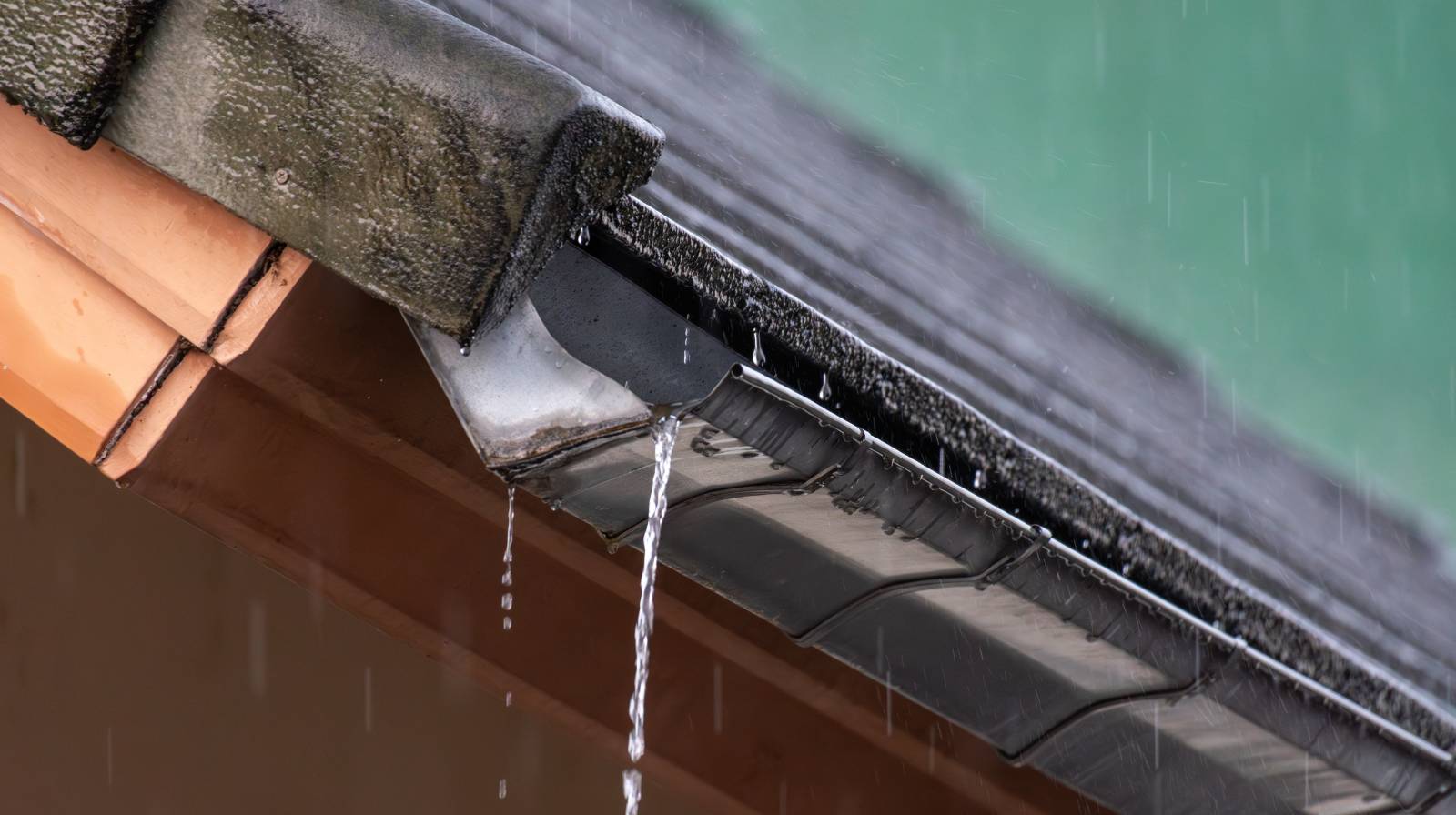
Water cascading over your gutters during Hawaii's heavy rains isn't just a nuisance—it’s a localized flood that threatens the structural integrity of your home. In the 808, where tropical downpours can dump inches of rain in under an hour, a functional gutter system is the first line of defense in your home's "Foundation of Life."
Gutter overflow stems from three primary issues: clogs, improper pitch, or undersized systems that simply cannot keep up with the volume of a Pacific storm. This comprehensive guide, provided by the experts at FBC Roofing & Exteriors, will help you diagnose your specific problem, recognize the silent warning signs, and take action before cosmetic issues turn into structural failures.
Why Your Gutters Overflow: The 3 Root Causes
Most overflow problems trace back to one of three mechanical failures. Understanding which one is affecting your home is the difference between a simple cleaning and a necessary system redesign.
1. The Debris "Dam"
Clogged gutters and downspouts account for the vast majority of overflow cases. In Hawaii's lush tropical environment, debris doesn't just sit in the troughs; it breaks down into a heavy, cement-like sludge.
Critical Points: Debris typically collects at downspout inlets and where roof valleys dump concentrated organic matter.
The 808 Factor: Local trees like Mango, Monkeypod, and various Palms drop large, heavy leaves that can block a downspout entrance in a single afternoon storm.
2. Improper Pitch or Slope
For water to reach the downspout, the gutter must be angled correctly. According to professional industry standards, gutters require a minimum 1/4-inch slope per 10 feet of run.
The Issue: Over time, heavy rain, sagging fascia, or settling foundations can reverse this pitch. When the "low point" is no longer at the downspout, water pools in the middle of the run and eventually spills over the front or back of the gutter.
3. Undersized Capacity for Hawaii Rainfall
This is the most overlooked cause on Oahu. Standard 5-inch gutters, which are common on many older homes, were designed for mainland rainfall averages.
The Math: Hawaii's tropical climate produces rainfall rates of 2–3 inches per hour during severe weather events. A standard 5-inch gutter often cannot handle the sheer velocity and volume of water coming off a steep roof. In high-rainfall zones like Kaneohe or the North Shore, 6-inch high-capacity gutters are often the only solution that works.
9 Warning Signs of Gutter Overflow
You don't need to wait for the next torrential downpour to know your system is failing. Visual clues are visible even on the sunniest days:
Vertical Staining: Watermarks or dark streaks on your siding directly below the gutter line.
Tiger Striping: Dark vertical streaks on the exterior of the gutter itself.
Fascia Blistering: Peeling or bubbling paint on the wooden boards behind the gutter.
Soil Erosion: Small trenches or "drip lines" carved into the dirt or mulch directly below the roof edge.
Standing Water: Pooling water in the gutters 24 hours after the rain has stopped.
Gutter Gardens: Seedlings, moss, or small plants growing in the debris sludge.
Siding Mold: Green or black fungal growth on exterior walls near the roofline.
Sagging Hardware: Gutters that visibly pull away from the house or lean forward.
Basement/Crawlspace Dampness: Musty smells or standing water at the lowest point of your home.
How Overflow Damages Your Home (And What It Costs)
Gutter overflow triggers a cascade of damage that accelerates rapidly in Hawaii's humid, salt-rich air. What begins as a small spill can lead to a complete structural overhaul.
Phase 1: Fascia and Soffit Rot (2–4 Weeks)
When water overflows, it often "wicks" back behind the gutter. This saturates the fascia boards (the wood the gutters are attached to). Because this wood is hidden, it rarely dries out.
The Result: Structural rot that causes the gutters to fall off entirely.
Estimated Cost: $800 – $2,500 for fascia repair and gutter re-hanging.
Phase 2: Foundation Erosion and Cracking (6–12 Months)
Your gutters’ primary job is to move water away from your foundation. Overflow allows hundreds of gallons of water to pour directly into the soil at the base of your home.
The Result: Hydrostatic pressure builds up, causing the soil to expand and contract. This leads to foundation cracks, interior drywall cracks, and doors that no longer shut properly.
Estimated Cost: $8,000 – $15,000+ for foundation piering or slab stabilization.
Phase 3: Roof Decking Decay (3–6 Months)
Without a properly integrated drip edge, overflowing water can seep under the first course of shingles.
The Result: The plywood "decking" of your roof rots from the edge inward. This turns a simple roof replacement into a much more expensive project requiring structural wood replacement.
Estimated Cost: $1,500 – $5,000 added to the cost of your next roofing project.
Comparison: Maintenance vs. Repair Costs
Cost Disclaimer: Pricing is based on 2026 Oahu market averages for professional labor and materials. Figures are estimates and vary based on home size, roof pitch, and material choices (e.g., Aluminum vs. Copper).
The Roof Valley Problem: Why Valleys Cause "Waterfalls"
Roof valleys are the most common failure point for gutter systems. A valley acts like a funnel, concentrating water from two large roof planes into one narrow point.
The Velocity Issue: Water coming down a valley gains massive momentum. It often shoots straight over the top of a standard gutter, missing the trough entirely.
The FBC Solution: We install custom splash guards and high-flow diverters at these intersections. These components break the water's momentum and force it into the gutter system, protecting the landscaping and foundation below.
High-Capacity Solutions: 6-Inch Gutters & Stainless Mesh
In the 808, "standard" isn't always good enough. We often recommend two specific upgrades for Hawaii homes:
6-Inch Seamless Gutters: These handle 50% more water than 5-inch systems. This extra capacity is essential for homes with steep pitches or long gutter runs.
Stainless Steel Micro-Mesh: Unlike plastic or foam guards (which rot or "overshoot" in heavy rain), stainless mesh blocks 95% of debris while allowing maximum water flow.
Work You Can Trust: The FBC Standard
As a GAF Master Elite Contractor established in 2014, FBC Roofing & Exteriors approaches gutters as a critical component of the roofing system. We don't just "slap on" gutters; we ensure they are perfectly integrated with your roof's drip edge to prevent water from ever touching your fascia wood.
"The team at FBC Roofing were responsive... they explained the roofing and gutter work clearly, and were very professional throughout the job. The roof looks perfect and the gutters are clean and sturdy." — Verified Review via Google
Take Action Before the Next Tropical Storm
Hawaii’s storms are unpredictable and intense. Gutter overflow isn't a problem that fixes itself—it is active, ongoing damage to your home’s "Foundation of Life." If you see sagging sections, vertical stains, or washed-out soil, your home is already at risk.
At FBC Hawaii, we offer comprehensive Gutter and Roofing Inspections. Our 7-year workmanship warranty ensures that your solution isn't just a temporary fix, but a long-term investment in your home's safety.
SCHEDULE YOUR FREE NO-OBLIGATION INSPECTION
FAQ: Gutter Overflow in Hawaii
1. Can I fix overflowing gutters by myself? If the cause is a simple clog, a safe DIY cleaning can resolve it. However, if the issue is improper pitch or undersized gutters, you will likely need professional re-hanging or an upgrade to 6-inch seamless gutters.
2. How often should I clean my gutters on Oahu? In high-debris areas (near large trees), we recommend quarterly cleanings. For homes with less foliage, twice a year—once in May before hurricane season and once after the winter rainy season—is the minimum requirement.
3. Why is water falling behind my gutters instead of over the front? This usually means your drip edge was installed incorrectly or your gutters have pulled away from the fascia. This is a high-priority repair, as it leads to rapid wood rot in your home’s eaves.
4. Are gutter guards worth it in Hawaii? Yes, but only if they are high-velocity stainless steel mesh. Cheap plastic or foam guards often fail under Hawaii’s intense UV and heavy rainfall, sometimes making the overflow worse by causing water to "skim" over the top.
5. Does my home insurance cover damage from overflowing gutters? Typically, no. Most insurance companies view gutter maintenance as a homeowner responsibility. Damage caused by "deferred maintenance" (like clogged gutters leading to a flooded basement) is often excluded from coverage.
6. Is a 6-inch gutter really necessary? If you have a large roof area or live in a high-rainfall zone like Manoa or Kaneohe, 6-inch gutters are highly recommended. They provide the necessary volume to prevent overflow during the sudden "flash floods" common in the islands.