
Roofing Fall Protection Oahu | OSHA Harness & Rope Guide | FBC Hawaii
Image Source Pets World
Roofing Fall Protection Oahu | OSHA Harness & Rope Guide | FBC Hawaii
OSHA Requirements: The 6-Foot Rule
Selecting Gear for Hawaii’s Environment
1. Material Science: Polyester vs. Nylon
2. The "3-5 Year" Rule and Retirement Protocols
Roofing Harness & Rope: The Ultimate Safety Guide for the 808
Falls are the leading cause of fatalities in the roofing industry, accounting for 36.5% of all construction deaths according to recent OSHA data. In Hawaii, the risks are amplified by steep valley slopes, sudden Kona wind gusts, and slick, moss-covered shingles. If you’re working at heights without a "Personal Fall Arrest System" (PFAS), you aren’t just risking a citation—you’re gambling with your life.
AtFBC Roofing & Exteriors, safety is the first step of everyRoofing Service we provide. Whether we are performing a routine shingle replacement or emergency storm repair, our "zero-fall" record across 1,000+ installs is a testament to these standards.
OSHA Requirements: The 6-Foot Rule
OSHA Standard 1926.501(b)(13) is unambiguous: fall protection is mandatory for residential roofing work when the walking/working surface is 6 feet or more above a lower level. In Hawaii, where many homes are built on slopes or feature "post-and-pier" foundations, that 6-foot threshold is met almost instantly.
The FBC Standard: We have seen many local contractors assume that "emergency work" or "quick leak repairs" exempt them from these safety requirements. They do not. OSHA does not suspend the rules for a hurricane or a fast patch. At FBC Hawaii, we treat every project—regardless of size or urgency—with full OSHA-compliant rigging. This protects our team and shields the homeowner from the massive liability of a job-site accident.
Selecting Gear for Hawaii’s Environment
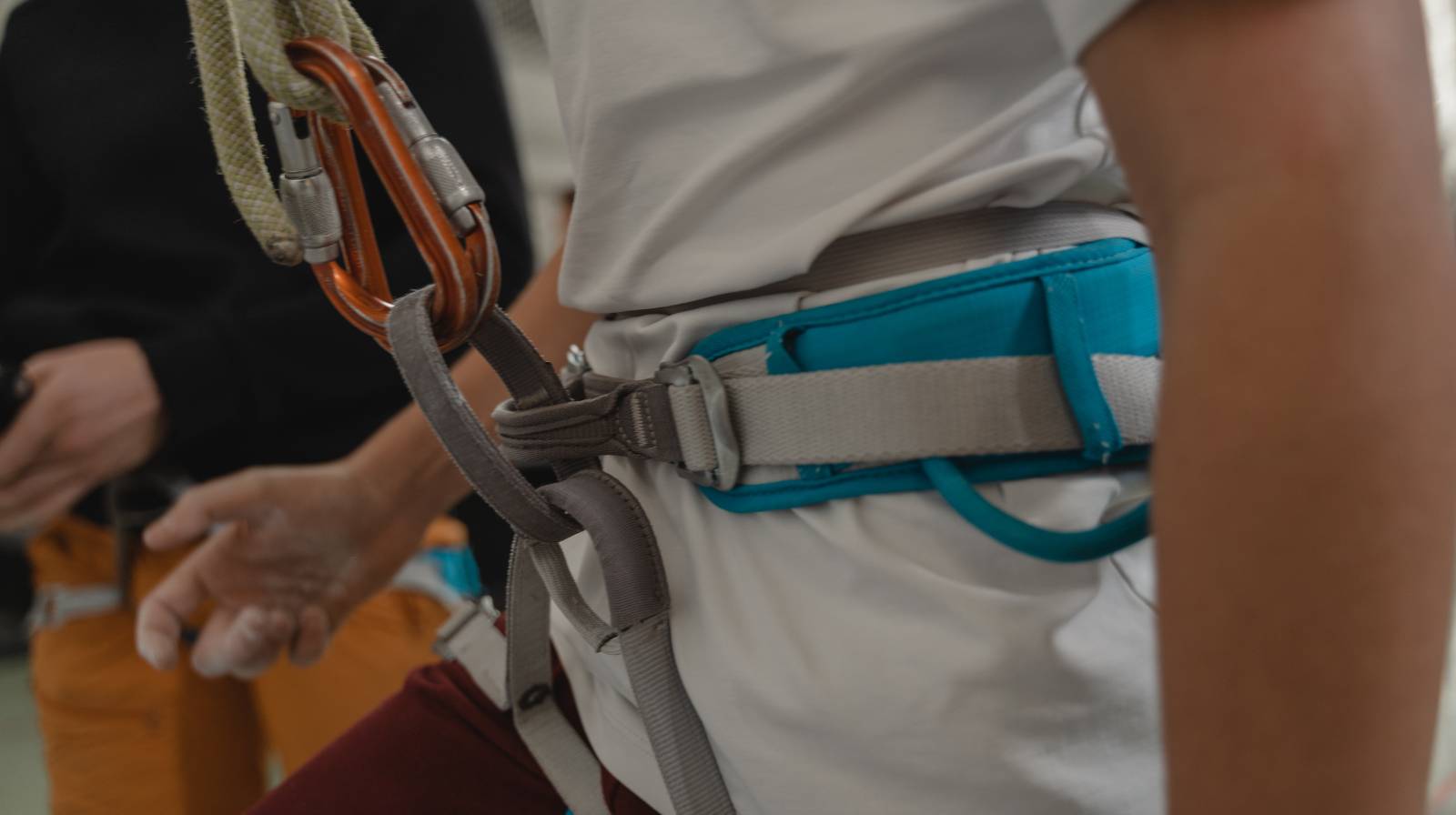
Not all harnesses are built for the Pacific. Between the intense UV index and constant salt-air corrosion, safety gear degrades faster on Oahu than almost anywhere else in the world. Using "off-the-shelf" mainland gear can lead to a false sense of security.
1. Material Science: Polyester vs. Nylon
Polyester Webbing: This is the gold standard for Hawaii. Polyester offers superior UV resistance, which is critical when a harness is under a 365-day solar assault. It maintains its tensile strength even after months of exposure to the tropical sun.
Nylon Webbing: While nylon is abrasion-resistant, it is highly susceptible to UV degradation. In the islands, nylon can lose 15–20% of its strength per year just from sun exposure.
Marine-Grade Hardware: For coastal projects in Ewa Beach, Kapolei, or the North Shore, we exclusively use harnesses with 316-grade stainless steel hardware. Standard galvanized steel hardware can begin to show "pitting" and structural corrosion within months of exposure to salt spray.
2. The "3-5 Year" Rule and Retirement Protocols
While many manufacturers state a 5-year equipment lifespan, our harsh environment often cuts that "safe" window down to 1–2 years.
Visual Warning Signs: Every harness features a "load indicator" (often red warning stitching). If this stitching is visible, the harness has likely been involved in a fall event or has been stressed beyond its limit and must be retired immediately.
The "Fist" Test: A harness is only safe if it fits. If you can fit more than a flat fist between the leg strap and the thigh, the harness is too loose and can cause severe internal injury during a fall arrest.
Calculated Risk: The Fall Distance Formula
Most roofers think a 6-foot lanyard keeps them safe from a 10-foot fall. The math says otherwise. Total fall distance is the sum of:
Lanyard Length: 6 feet
Deceleration (Shock Absorber Deployment): 3.5 feet
Harness Stretch: 1 foot
Worker Height (D-ring to feet): 6 feet
Safety Margin: 2 feet
Total Clearance Needed: 18.5 Feet
If you are on a single-story home with 10-foot eaves, a 6-foot lanyard will not stop you before you hit the ground. For these "low-clearance" jobs, our crews use Self-Retracting Lifelines (SRLs), which lock instantly like a car seatbelt and reduce fall distance to under 4 feet.
Work You Can Trust
We handle the high-stress coordination and safety protocols so you don't have to worry about a liability nightmare on your property.
"I was nervous at first, this was a multistep and multi-party project that required coordination. The team at FBC Roofing were responsive to my queries. They arrived on time, explained the roofing and gutter work clearly, and were very professional throughout the job. The roof looks perfect and the gutters are clean and sturdy. I am a demanding customer and appreciated the project manager's quick, direct response and ensuring the crew completed the work to my expectations. I would definitely recommend FBC Roofing to anyone needing reliable roofing services." Don L. Google Review
Roofing Safety FAQ
Visit our FAQ page for more on our professional standards.
1. Does FBC use fall protection for "quick" inspections? Yes. Any work above 6 feet requires protection. We use temporary ridge anchors that preserve your shingle warranty while keeping our team safe.
2. Can a harness be reused after a fall? No. Any component involved in a fall arrest event must be retired and destroyed immediately, even if it looks perfect. The internal fibers have been stretched to their limit and will not hold a second time.
3. What is the "Swing Fall" hazard? If your anchor isn't directly above you, you will swing like a pendulum if you fall. This can slam you into walls or roof edges at high velocity. We position multiple anchors to minimize this "swing" radius.
4. Why is 316-grade stainless steel important for harnesses? Oahu's salt air is highly corrosive. Standard steel buckles can rust and seize, making them impossible to adjust or, worse, brittle enough to fail under load. 316-grade is "marine-grade" and resists this corrosion.
5. How do you anchor to a roof without causing leaks? We use specialized plate anchors that are flashed and sealed according to our highGutter Services and roofing standards. For metal roofs, we use non-penetrating clamps.
Your Safety is Our Foundation
Don't hire a contractor who gambles with lives. At FBC Hawaii, we protect our workers so we can protect your home.
Ready for a safe, professional audit?