Coastal Metal Roofs Oahu | FBC Hawaii
Hawaii Fascia Damage Guide | FBC Hawaii - Copy
The Chemistry of Corrosion: Why Salt Air is So Destructive on Oahu
Choosing the Right Base Metal for Coastal High-Salt Zones
High-Performance Coastal Defense Coatings
Fastener Integrity: The "No-Rust" Mandate
Maintenance and Care for Coastal Metal Roofs
Salt Air vs. Metal Roofs: Choosing the Right Coating for Coastal Ewa Beach Homes
If you live in Ewa Beach, Iroquois Point, or anywhere along Oahu’s southern coastline, you are intimately familiar with the trade-off of coastal living. You get the incredible ocean views and cooling breezes, but your home’s exterior is in a constant state of war with "Salt Spray." In Hawaii, salt air is not just a pleasant tropical scent; it is a highly corrosive aerosol that can eat through standard building materials and low-grade metals in a matter of months.
While metal roofing is increasingly popular across the islands for its longevity and Storm Damage Repair resilience, the wrong choice of metal substrate or protective coating can lead to "Filiform Corrosion." This is a creeping, spider-web-like rust that destroys a metal panel from the inside out, often hidden beneath the paint until it is too late for a simple Roof Repair. At FBC Hawaii, we have been the 808 experts in coastal roofing solutions since 2014. This comprehensive guide will help you navigate the technical world of coastal coatings and substrates so your Ewa Beach home remains protected for decades, not just years.
The Chemistry of Corrosion: Why Salt Air is So Destructive on Oahu
Coastal environments on Oahu are classified by engineers and manufacturers as "Severe Marine" environments. In areas like Ewa Beach, the prevailing Trade Winds carry fine salt particles from the breaking surf and deposit them directly onto your rooftop. Unlike rain, which can wash surfaces, the high humidity in Hawaii often keeps these salt deposits in a damp, active state.
The Electrolyte Effect and Metal Oxidation
Salt (sodium chloride) acts as a powerful electrolyte. When the constant moisture from our high 808 humidity levels mixes with salt on a metal surface, it creates a chemical reaction that dramatically accelerates oxidation.
Galvanized Steel Failure: Standard galvanized steel (which is steel coated in a thin layer of zinc) often fails prematurely in Ewa Beach. The salt air aggressively eats through the sacrificial zinc layer, exposing the raw steel underneath to rapid, structural rusting.
The Danger of "Edge Creep": Salt air specifically targets the "cut edges" of metal panels. This is where the protective factory coating ends and the core of the metal is exposed. This leads to rust that spreads horizontally under the paint—a process known as edge creep—eventually requiring a total Roof Replacement.
Choosing the Right Base Metal for Coastal High-Salt Zones
Before you even begin to pick a shingle color or standing seam profile, you must select the correct base metal substrate. In Ewa Beach, the physical distance from the high-tide line (the "salt spray zone") dictates which metal you should invest in for long-term survival.
Coastal Metal Substrate Comparison
The Aluminum Advantage for Ewa Beach
For homes in "Oceanfront" or "Second-Row" positions along One'ula Beach or White Plains, FBC Hawaii almost exclusively recommends Aluminum Roofing. Unlike steel, aluminum contains no iron, which means it is chemically incapable of "rusting" in the traditional sense.
Self-Healing Properties: Even if the salt air manages to scratch the factory coating, the exposed aluminum naturally forms its own protective oxide layer, sealing itself off from further deep-tissue corrosion.
Weight Benefits: Aluminum is significantly lighter than steel, reducing the dead load on your New Build or renovation structure.
High-Performance Coastal Defense Coatings
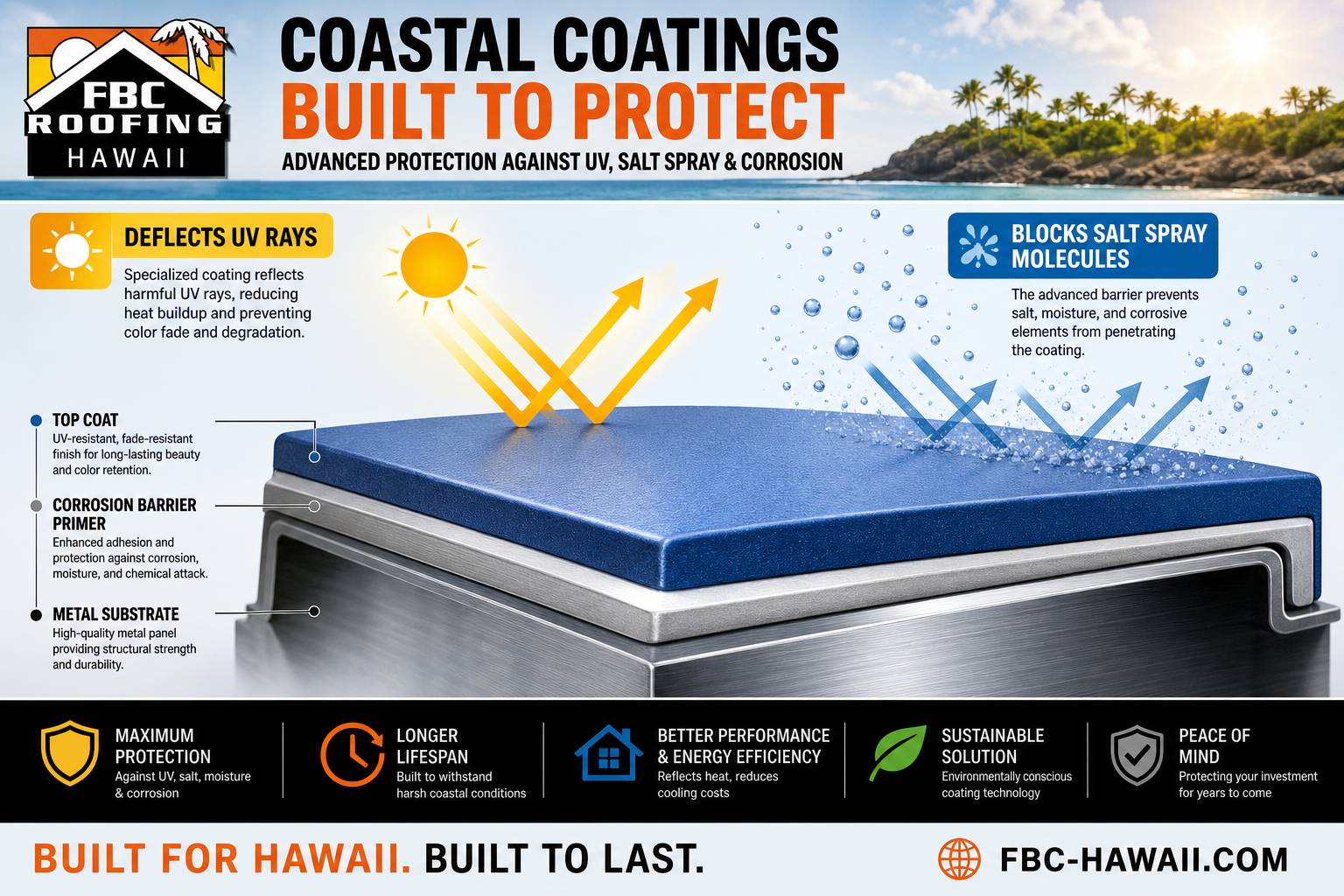
In Hawaii, the finish on your metal roof isn't just for curb appeal—it is a specialized chemical barrier designed to deflect photons and block corrosive ions.
The Industry Standard for Coastal Protection
FBC Hawaii utilizes advanced, high-performance finishes for our coastal Roof Replacements. These specialized coatings offer the highest level of protection available for the Pacific.
Extreme UV Resistance: High-grade coatings are specifically engineered to resist the "Extreme" Hawaii UV index that causes standard paints to "chalk," fade, and lose their protective seal.
Chemical Stability: The molecular bonds in advanced coastal finishes make it extremely difficult for salt ions to penetrate the finish and reach the metal substrate.
Flexibility: Hawaii’s intense heat causes metal panels to expand and contract. Top-tier coatings are flexible enough to move with the metal without cracking or developing micro-cracks.
Fastener Integrity: The "No-Rust" Mandate
One of the most common ways a metal roof fails in coastal zones has nothing to do with the panels—it is the choice of fasteners. If a roofer uses standard galvanized fasteners on a coastal metal roof, the salt air can compromise those screws in just a few years.
The Structural Failure Problem
When non-coastal fasteners rust, they can "cross-contaminate" the metal panel through galvanic action, causing failure at the most critical point: the attachment.
Corrosion-Resistant Fasteners: For coastal projects, specialized, corrosion-resistant fasteners and custom-fit metal seals are essential.
Gasket Integrity: UV-stabilized EPDM rubber washers are critical to prevent Roof Leak Repairs caused by the sun drying out and cracking the seal around the screw head.
Maintenance and Care for Coastal Metal Roofs
Even a world-class coastal roof requires maintenance to reach its full design life. In Hawaii, salt buildup is the primary catalyst for finish degradation.
Routine Freshwater Rinsing: Some advanced coastal systems are designed for minimal maintenance, but routine freshwater rinsing can help wash away concentrated salt crystals.
Gutter Health and Drainage: Salt often accumulates in stagnant water within clogged gutters. Ensure you have a functioning Gutter Replacement system to prevent salt water from constantly soaking the bottom edge of your panels.
Ventilation and Soffit Checks: Salt air can enter your home through the eaves. Checking your Soffit & Fascia during your Gutter Cleanouts ensures that salt spray isn't being pulled into your attic.
Coastal Metal Roofing FAQ for Oahu Homeowners
Is a metal roof louder in the rain compared to shingles?
This is a common myth. With modern installation techniques that include advanced underlayments and proper attic insulation, a metal roof is no louder than other roofing materials.
Is Aluminum significantly more expensive than Steel?
While initial material costs vary, aluminum is highly recommended for coastal environments because it virtually never needs to be replaced due to rust, saving you money while adding long-term value to your property.
Does FBC Hawaii offer specialized coastal warranties?
Yes. As a GAF Master Elite® contractor, FBC Hawaii is factory-certified to install complete roofing systems that qualify for the industry's strongest warranties, covering both materials and workmanship for up to 50 years.
Can salt air damage my home’s siding as well?
Absolutely. Salt air affects the entire building envelope. We provide comprehensive Siding Services and Roofing Siding Repairs to ensure your home is hardened against the 808 environment.
Protect Your Investment with an 808-Ready Coastal Roof
Coastal living in Hawaii should be about enjoying the ocean, not worrying about your roof disintegrating. At FBC Hawaii, we understand the specific challenges of the Ewa Beach and Iroquois Point environments. We provide the expert craftsmanship and specialized materials required to ensure your home stands strong against the salt, the sun, and the sea.