
Soffit and Fascia Repair Oahu | FBC Hawaii
Gutter Installation Oahu | FBC Hawaii - Copy
Understanding the Critical Role of Fascia and Soffit
The Fascia: The Gutter’s Structural Foundation
The Soffit: The Attic’s Vital Ventilation System
Why Hawaii Homes Face Rapid Fascia and Soffit Decay
Signs Your Soffit or Fascia Needs Immediate Attention
The FBC Repair Process: Engineered for the 808
Soffit and Fascia Repair: Protecting the "Foundation" of Your Gutter System on Oahu
When homeowners think about their roof, they usually focus on the shingles. When they think about drainage, they focus on the gutters. However, the critical link between these two is the Soffit and Fascia. On Oahu, these components aren't just decorative trim; they are the frontline defense against Hawaii’s intense humidity, wind-driven "sideways" rain, and aggressive subterranean termites.
At FBC Roofing & Exteriors, established in 2014, we’ve seen how neglected fascia boards can lead to catastrophic gutter failure and structural rot. If your gutters are sagging, or if your eaves show signs of peeling paint and dark stains, your home’s "Foundation of Life" is likely compromised. Here is why Soffit and Fascia repair and replacement is an essential investment for every Oahu property owner.
Understanding the Critical Role of Fascia and Soffit
To understand why repairs are so vital for the longevity of your home, you must first understand the engineering purpose these components serve in our tropical environment.
The Fascia: The Gutter’s Structural Foundation
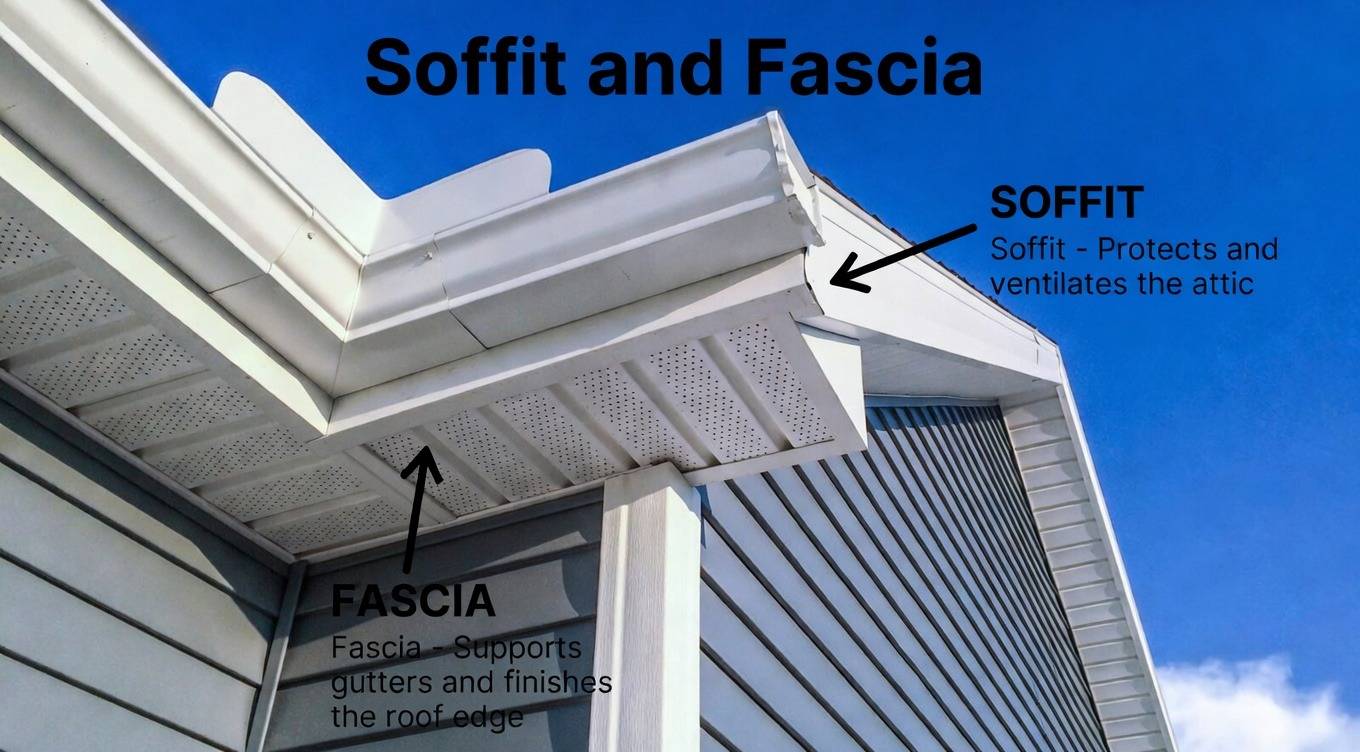
The fascia is the vertical finishing board that runs along the edge of your roofline. It acts as the primary mounting surface for your Gutter System. In Hawaii, the fascia must support the immense weight of thousands of gallons of water during a tropical downpour. If this board becomes soft, rotted, or infested with termites, it loses its "screw-holding" power. This causes your gutters to tilt forward, spill water onto your foundation, and eventually pull away from the house entirely.
The Soffit: The Attic’s Vital Ventilation System
The soffit is the panel located underneath the roof overhang. Its primary job is to house soffit vents. In the 808’s extreme heat, these vents are the "intake" for your attic's lungs. They allow your roof to breathe by drawing in cool air to push hot, moist air out through the ridge vents. Without functioning, unobstructed soffits, your attic becomes a pressurized oven, "cooking" your shingles from the inside out, causing premature shingle failure and doubling your monthly air conditioning costs.
Why Hawaii Homes Face Rapid Fascia and Soffit Decay
Mainland homes might go decades without needing an eave repair. In Hawaii, the timeline is significantly shorter due to three specific island threats that attack the "soft spots" of your home's exterior.
Chronic Gutter Overflow and "Wicking": When gutters are clogged with mango leaves or monkeypod needles, water backs up and sits directly against the wood fascia. Because of our high ambient humidity, this wood rarely dries out. This creates a "wicking" effect where water is sucked into the grain, leading to dry rot and fungal growth in a matter of months.
Subterranean Termite Super-Highways: Damp, decaying fascia wood is a beacon for Hawaii's subterranean termites. Once they establish a colony in your eaves, they can easily migrate into your roof rafters, trusses, and wall framing. Replacing a fascia board is affordable; replacing a roof truss is a structural nightmare.
Salt-Air Corrosion & Paint Failure: For coastal homes in Ewa Beach, Hawaii Kai, or Kaneohe, salt spray accumulates on the underside of the eaves (the soffit). This salt traps moisture against the wood fibers, causing paint to bubble, crack, and delaminate. Once the paint fails, the raw wood is exposed to the elements, leading to rapid delamination and "spalling."
Signs Your Soffit or Fascia Needs Immediate Attention
Early detection can save you from a full $10,000+ eave reconstruction. Watch for these red flags during your next walk-around:
The "Gutter Gap": If you can see light between your gutter and the house, or if the gutter appears to be "leaning" forward, the fascia board is likely too soft to hold the mounting fasteners.
Peeling or Bubbling Paint: This isn't just an aesthetic issue; it’s a sign that moisture is trapped inside the wood and trying to escape.
Dark Water Stains & Algae: Look for dark streaks on the underside of your soffits. This indicates that water is leaking behind your drip edge and saturating your interior wood.
Pest Activity: Increased sightings of "frass" (termite droppings) or mud tubes near the roofline mean wood-boring insects have already moved into your structural eaves.
Technical Pro-Tip: Many homeowners try to hide rot by simply painting over it. At FBC Hawaii, we call this "lipstick on a pig." If the structural integrity of the wood is gone, new paint will bubble and peel again within months. True protection requires removing the rotted section entirely and treating the area.
The FBC Repair Process: Engineered for the 808
As a GAF Master Elite Contractor, we don't just "patch" wood. We restore the structural integrity of your roof edge using island-proven materials and techniques.
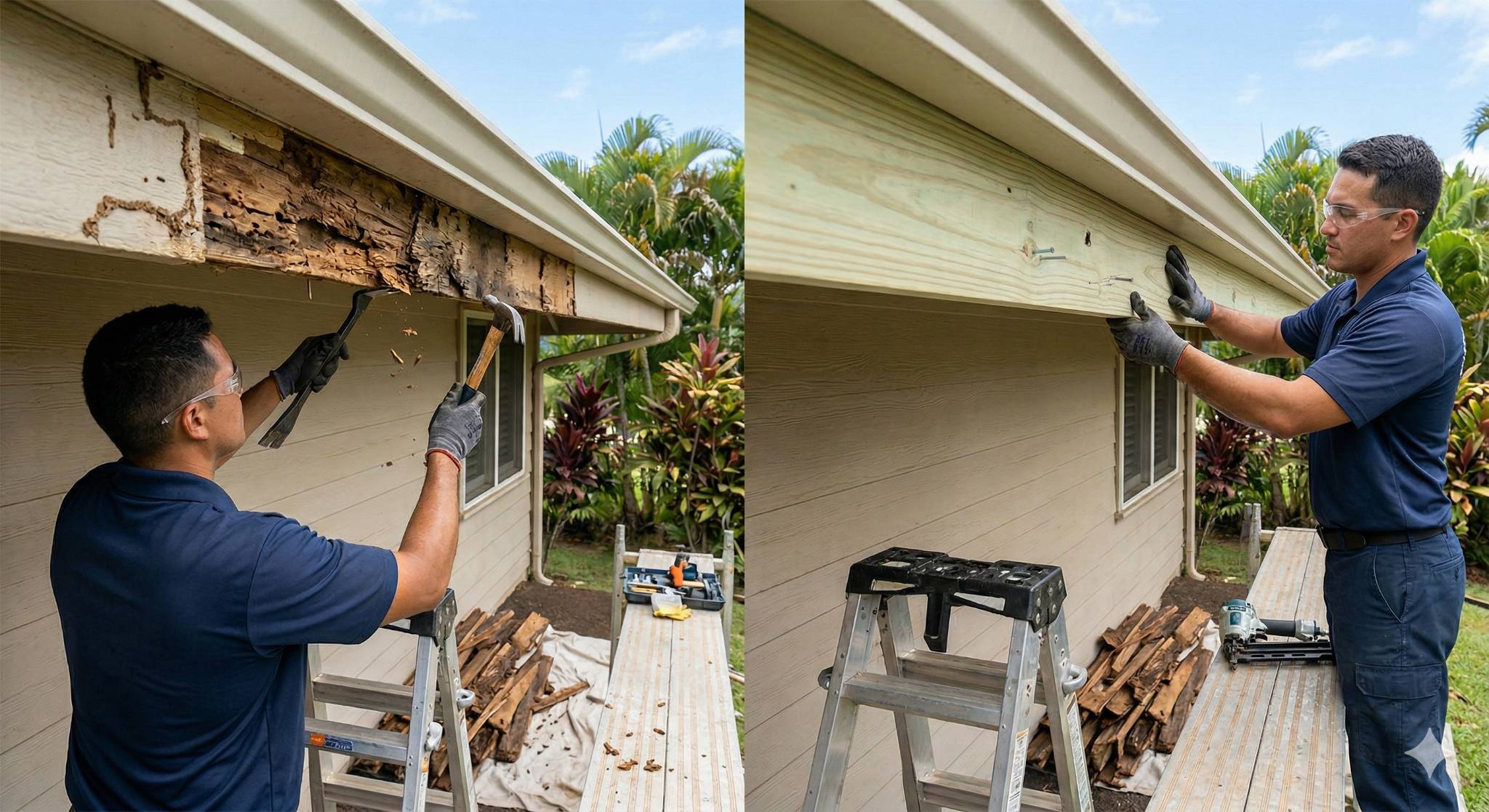
Surgical Removal: We remove the gutters and strip away all rotted wood to inspect the rafter tails for deeper structural damage.
Pressure-Treated & Synthetic Materials: We exclusively use high-grade, pressure-treated lumber or fiber-cement boards (like James Hardie) that are naturally resistant to rot, fire, and termites.
Six-Sided Priming: We prime all six sides of every new board—not just the front face—to ensure a total moisture barrier that prevents future rot.
Ventilation Optimization: We verify that your new soffits have the correct Net Free Vent Area (NFVA) to meet modern Hawaii building codes, ensuring your attic stays cool and dry.
Fascia and Soffit Repair Costs on Oahu (2026 Estimates)
Investing in your eaves now prevents a full roof failure later. Here is what to expect for budgeting:
Pricing Disclaimer: Costs reflect 2026 Oahu market rates. Hawaii pricing is typically 15–25% higher than the mainland due to specialized material shipping (Jones Act) and local labor. An exact quote requires a physical inspection to check for hidden termite or rafter-tail damage.
Soffit & Fascia FAQ
1. Can you fix my fascia without taking down the gutters? In almost all cases, no. To properly replace the board and seal the wood behind it, the gutters must be safely removed and then re-installed (and re-sloped) once the new fascia is cured.
2. Should I switch to vinyl or aluminum soffits? For coastal Hawaii homes, vinyl or aluminum soffits are excellent choices because they are immune to termites and rot. FBC Hawaii can provide several material samples during your on-site consultation.
3. Does FBC offer free inspections for wood rot? Yes. We provide a Free, No-Obligation Inspection where we check your roof, gutters, and eaves for any signs of water damage, termites, or structural failure.
4. How long does a typical repair take? Most residential fascia and soffit repairs on Oahu are completed in 1–2 business days, ensuring your home is sealed before the afternoon showers.
5. Is fascia rot covered by my homeowners insurance? Generally, insurance does not cover wood rot as it is considered a maintenance issue. However, if the fascia was damaged by a sudden storm event (like a falling tree limb during a Kona storm), it may be covered. We can help you document the damage for your adjuster.
Don't Let Rotted Wood Compromise Your Home
Your roof is only as strong as the wood holding it up. If you suspect your fascia or soffits are failing, don't wait for the next heavy rain to cause a gutter collapse. Protect your "Foundation of Life" with the local experts who understand Oahu's unique structural needs.