
Synthetic Roof Underlayment Hawaii Guide
GAF Shingle Colors: Hawaii Style Guide - Copy
What Exactly Is Synthetic Roof Underlayment?
Why Traditional Felt Paper Falls Short in Hawaii’s 808 Climate
FBC Roofing Hawaii Standard: Side-by-Side Comparison
Technical Advantages: Tear Strength, Safety, and Wind Resistance
Why Synthetic Underlayment Is Required for Maximum GAF Warranty Protection
Underlayment Checklist: Is Your Oahu Roof Truly Protected?
Synthetic Roof Underlayment Hawaii Guide: The "Invisible Armor" Protecting Oahu Homes
When most homeowners in Hawaii think about investing in a new roof, their attention usually goes straight to the visible part — the shingles. They consider colors like Charcoal, Cedar, Mesa Brown, Autumn Brown, or Weathered Wood, the aesthetic profile, and how the finished roof will boost curb appeal.
However, at FBC Roofing Hawaii, a trusted GAF Master Elite® contractor serving Oahu since 2014, we know that the real hero of any durable roof system is the layer homeowners rarely see: the synthetic roof underlayment.
This high-performance material acts as the "Invisible Armor" beneath your shingles. In Hawaii’s challenging 808 climate — marked by constant high humidity, salt-laden trade winds, intense UV exposure, and frequent wind-driven rain — choosing the right underlayment can mean the difference between a roof that lasts decades and one that fails prematurely.
At FBC, we no longer use traditional asphalt felt paper ("tar paper" or "roofing paper rolls") on any of our projects. Instead, we install premium synthetic underlayment such as GAF FeltBuster® or Deck-Armor™. This shift isn’t just a preference; it’s a deliberate strategy to provide superior protection for Oahu homes in areas like Ewa Beach, Kailua, Manoa, Mililani, Kaneohe, and the North Shore.
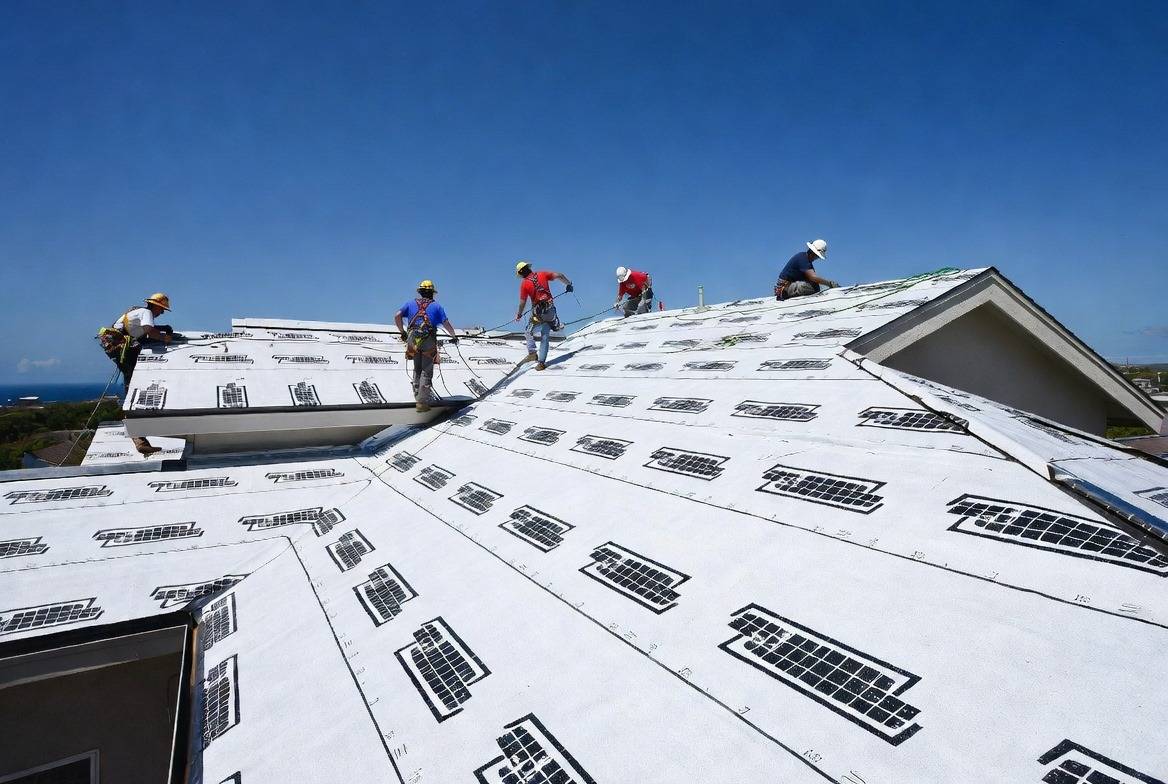
Image: Professional installation of high-performance synthetic roof underlayment on an Oahu home.
What Exactly Is Synthetic Roof Underlayment?
Traditional underlayment consists of organic felt paper — basically recycled paper or cellulose fibers saturated with asphalt. While it served the industry for many decades, it has inherent limitations that become especially problematic in tropical environments like Hawaii.
Synthetic roof underlayment, by contrast, is manufactured from advanced polypropylene or polyethylene polymers. It functions as a robust secondary water-shedding barrier. If high winds or heavy rain ever drive moisture past your outer shingles, this layer protects the wooden roof deck and the interior of your home from leaks, rot, and mold.
Why Traditional Felt Paper Falls Short in Hawaii’s 808 Climate
Oahu’s micro-climates are unforgiving. Salt spray in coastal zones like Ewa and Hawaii Kai, persistent moisture in lush valleys such as Manoa and Nu’uanu, and powerful trade winds across the island create perfect conditions for underlayment failure. Here are the main reasons traditional felt paper becomes a liability:
Moisture Absorption and Rot Felt paper is organic and absorbent. In Hawaii’s average 70-80% humidity levels, any trapped moisture can lead to rapid deterioration, mold growth, and eventual rot of the underlayment and even the roof deck itself. Synthetic materials are completely non-organic and repel water, eliminating this risk entirely.
The Wrinkling Problem Oahu experiences frequent passing showers. When felt paper gets wet during installation, it expands unevenly and forms wrinkles. These ridges can telegraph through the shingles above, resulting in an unattractive wavy or bumpy appearance on your finished roof. Synthetic underlayment remains dimensionally stable and lays perfectly flat regardless of weather conditions during installation.
UV Degradation Hawaii’s intense tropical sun quickly dries out and embrittles asphalt-saturated felt when it sits exposed on the roof deck. Synthetic underlayment is specially UV-stabilized, often rated to withstand weeks or even months of direct sunlight without losing strength or integrity.
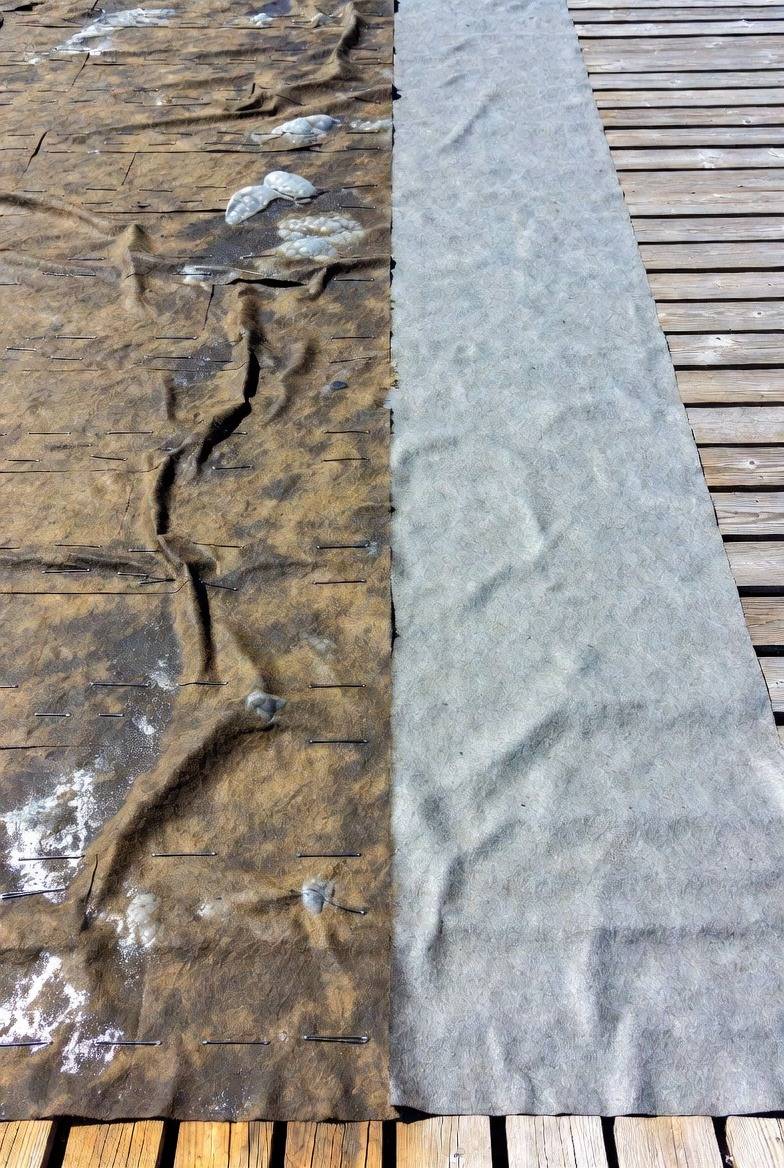
Image: Traditional felt paper issues versus smooth synthetic underlayment performance.
FBC Roofing Hawaii Standard: Side-by-Side Comparison
As a GAF Master Elite® contractor, FBC follows a strict “Total Protection” approach. We armor every roof we install. Here’s how the two options compare:
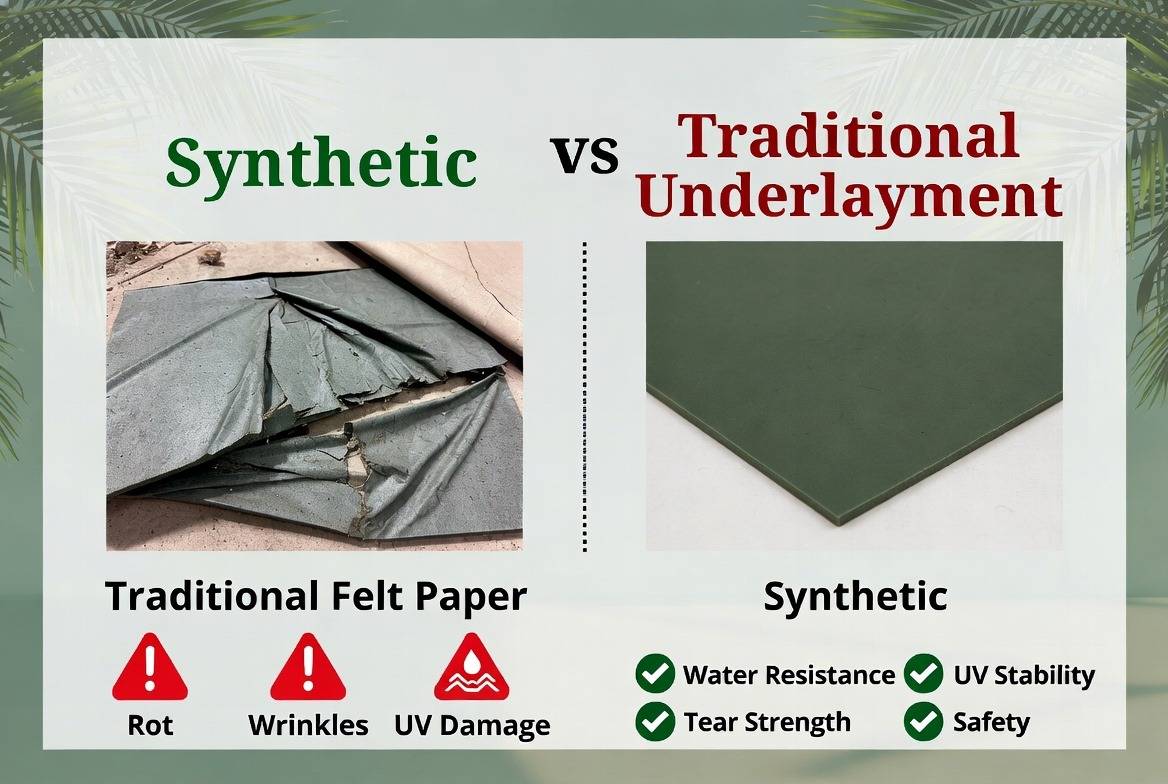
Image: Synthetic Underlayment vs Traditional Felt Paper – Feature Comparison.
Technical Advantages: Tear Strength, Safety, and Wind Resistance
In Hawaii, trade winds can exceed 30-40 mph on a regular basis, with gusts much higher during storms. Traditional felt can tear away from fasteners during installation, leaving the home vulnerable. Synthetic underlayment features a much higher tear threshold and stays securely fastened.
The textured surface also improves traction for roofing crews, reducing slip risks — especially important on steep pitches or during humid conditions common on Oahu.
Why Synthetic Underlayment Is Required for Maximum GAF Warranty Protection
GAF offers tiered warranties, with the Golden Pledge® Limited Warranty representing the highest level of protection available. To qualify for this premium coverage — which can include up to 50 years of non-prorated material protection and extended workmanship coverage (typically 25 years when installed by a Master Elite® contractor) — the entire roofing system must use qualifying components, including approved synthetic roof deck protection.
By choosing synthetic underlayment, FBC ensures your new roof meets these strict requirements, giving you peace of mind that lasts for decades.
Underlayment Checklist: Is Your Oahu Roof Truly Protected?
Use this simple interactive-style checklist to evaluate your current or planned roof:
Your property is in a coastal or high-humidity area (Ewa, Kailua, Manoa, Kaneohe, etc.)
You’ve noticed wavy, uneven, or bubbling shingles
Your roof is over 10-15 years old and was likely installed with traditional felt
You want eligibility for the full GAF Golden Pledge® Lifetime Warranty
Long-term resistance to wind-driven rain, salt air, and UV is a priority
You value installer safety and a professional, smooth finished appearance
Scoring Guide:
0–2 checks: Traditional methods may still be in use — consider an upgrade.
3+ checks: Synthetic underlayment is strongly recommended for lasting protection in Hawaii.
Real-World Benefits for Hawaii Homeowners
Beyond technical specs, synthetic underlayment delivers practical advantages. It speeds up installation because crews spend less time battling wrinkles or tears. It reduces callbacks for leaks or cosmetic issues. Most importantly, it helps prevent costly interior water damage that can occur when underlayment fails during Hawaii’s rainy season or tropical storms.
Homeowners who choose FBC also benefit from our full-service approach, including proper flashing, ventilation, and integration with GAF Timberline® or Grand Sequoia® shingles as part of our comprehensive roofing services.
Underlayment FAQ
Here are answers to the most common questions we receive from Oahu homeowners:
Is synthetic underlayment significantly more expensive than felt paper? The material cost is modestly higher, but the labor savings, superior durability, and avoidance of future repairs make it far more cost-effective over the 25–50 year life of your roof. Many clients find the long-term value easily outweighs the small upfront difference.
Can synthetic underlayment be used under metal roofs as well as asphalt shingles? Yes. It performs excellently under both. For metal roofing systems, we often select high-temperature-rated synthetic variants to handle greater heat transfer while still providing excellent water protection.
Does synthetic underlayment contribute to energy efficiency or “Cool Roof” performance? While the underlayment itself is not the primary reflective layer, its ability to stay dry and allow the roof assembly to “breathe” helps maintain better attic temperatures. When paired with cool-roof-rated shingles and proper ventilation, it supports overall energy efficiency in Hawaii’s tropical climate.
How can I tell if my existing roof has traditional felt or synthetic underlayment? During a free roof inspection, our technicians can identify it by examining edges near the drip edge, checking for wrinkles or bubbling under the shingles, or noting the material’s texture and flexibility. Older roofs (pre-2015 in many cases) almost always have felt.
Is synthetic underlayment required for GAF warranties? Yes — qualifying synthetic underlayment is required to activate the highest-tier GAF warranties, including the Golden Pledge®. Using standard felt may limit you to basic coverage only.
Does it help protect against mold and rot in high-humidity areas like Manoa or Nu’uanu? Absolutely. Because it does not absorb moisture or support organic decay, synthetic underlayment is one of the best defenses against mold growth in Hawaii’s wetter valleys and windward sides.
How long does synthetic underlayment last compared to felt? While the underlayment itself is designed to last the life of the roof, synthetic versions maintain their integrity far longer than felt, which can degrade within 10–15 years in Hawaii’s climate, potentially compromising the entire system.
Don’t Settle for Outdated “Paper” Protection in 2026
Your home is likely your largest investment. In Hawaii’s demanding environment, cutting corners with outdated 1950s-era felt paper technology simply doesn’t make sense. At FBC Roofing Hawaii, every roof we build uses premium synthetic underlayment — the true “Invisible Armor” that works silently to keep your family dry and your home protected.
Whether you’re planning a full replacement with GAF Timberline® shingles or addressing storm damage, the underlayment decision matters more than most homeowners realize.
Is your roof protected by modern armor or just old paper?
Contact us now to schedule your FREE, no-obligation roof inspection. Our experienced team serves all of Oahu, including Honolulu, Ewa, Kailua, Kaneohe, Mililani, and the North Shore.