
Best Time for Roof Repair Oahu | FBC
Hawaii Storm Roof Damage Signs | Oahu Insurance Claims Guide - Copy
1. The "Cure" Factor: Optimal Thermal Bonding for Shingles
2. Beating the "June 1st Rush" and Material Shortages
3. Protecting the "Dry Envelope" During Low-Rain Windows
4. Identifying "Salt-Air" Fatigue Before the High Winds Arrive
5. Financial Sanity: Avoiding the "Emergency Premium"
The FBC Hawaii "May Readiness" Checklist
Why May is the Safest Month to Repair Your Oahu Roof Before Hurricane Season
In the world of Hawaii home maintenance, timing isn't just a preference—it’s a strategic necessity. While many homeowners wait until a visible leak appears during a winter Kona storm or a sudden summer tropical depression to call a roofing contractor, the proactive window for a high-quality, long-lasting fix is actually much smaller.
On Oahu, May is statistically and technically the safest month to perform roof repairs or full replacements. As we transition out of the spring rainy season and approach the official June 1st start of the Central Pacific Hurricane Season, the environmental conditions in the islands align perfectly for roofing work. Since FBC Hawaii was established in 2014, we have consistently advised our clients that a repair made in May is more durable, more cost-effective, and far less stressful than an emergency fix in the middle of a storm.
Here is the technical, environmental, and strategic breakdown of why May is the "Goldilocks" month for your home’s "Foundation of Life."
1. The "Cure" Factor: Optimal Thermal Bonding for Shingles
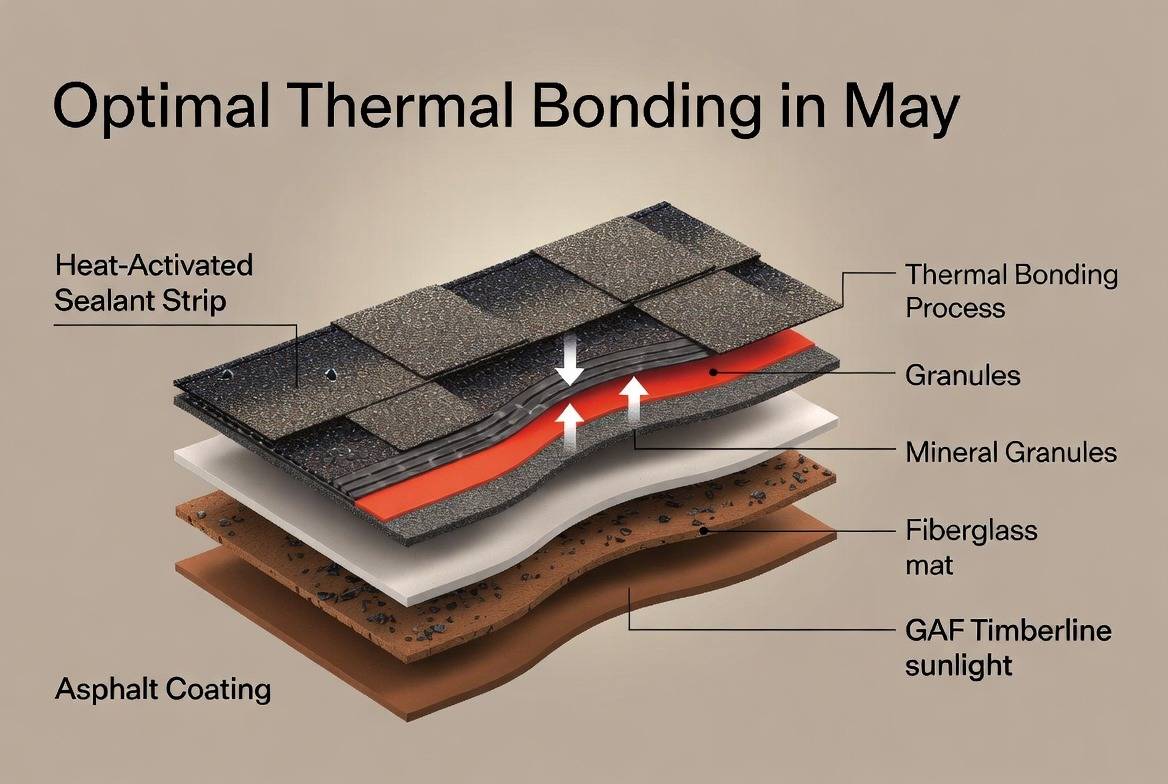
Many homeowners don't realize that asphalt shingles don't become fully waterproof or wind-resistant the moment they are nailed down. They require a process called thermal bonding (or "heat sealing").
Modern high-performance shingles, such as the GAF Timberline HDZ® series we install, feature a heat-activated adhesive strip known as a "sealant bit." For this strip to "activate" and create a monolithic, wind-resistant barrier, it needs a specific amount of consistent solar heat and pressure.
The May Advantage: In May, Oahu’s temperatures are warm but have not yet reached the "extreme" levels of August and September. This allows the shingles to warm up and bond to one another at a steady rate. This creates a uniform seal without the risk of "thermal shock" or "scuffing." Scuffing occurs when workers walk on shingles in 100°F+ mid-summer heat, which can soften the asphalt and damage the protective granules.
The Risk of Waiting: If you wait until the rainy season or a cold, cloudy Kona storm to fix your roof, the shingles may not reach the temperature required to "seal" for weeks. A shingle that hasn't cured is essentially a loose flap, waiting for a 50mph gust to rip it off. By repairing in May, you ensure the roof is "Hardened" and fully bonded before the first tropical storm warning is issued.
2. Beating the "June 1st Rush" and Material Shortages
As an SEO specialist and local contractor, we monitor search trends closely. Every year, the search volume for "emergency roof repair Oahu" skyrocket the moment the first hurricane warning is issued by the Central Pacific Hurricane Center. By then, the demand for local labor far exceeds the supply.
Contractor Availability: In May, the roofing industry is still operating on a standard, manageable schedule. Once June 1st hits and the local news cycle starts focusing on storm tracks, our phones do not stop ringing. By scheduling your repair in May, you ensure you get our "A-Team" of factory-trained installers and a dedicated timeline, rather than being placed on a 6-to-8-week emergency waiting list.
Supply Chain Stability: Hawaii’s construction materials are subject to the Merchant Marine Act of 1920 (Jones Act), meaning every shingle, nail, and roll of underlayment arrives via cargo ship. When a major storm is approaching, shipping schedules can be disrupted and Honolulu harbor can close. Getting your materials secured, delivered, and installed in May eliminates the risk of your project being delayed by shipping backlogs or storm-related harbor closures.
3. Protecting the "Dry Envelope" During Low-Rain Windows
Any major roof repair or replacement is a "destructive" process. To fix a roof, we must strip away the old materials down to the plywood deck. This leaves your home’s interior, electronics, and valuables vulnerable to the sky for a period of 24 to 72 hours.
Predictable Weather Patterns: May typically offers the most predictable and stable weather windows on Oahu. While we still encounter trade wind showers, we are far less likely to run into the massive, multi-day "atmospheric rivers" common in the winter or the sudden, violent tropical depressions of late summer.
Reduced Risk of Interior Damage: Performing a full roof replacement in May significantly reduces the chance that an unexpected downpour will catch a crew mid-installation. This protects your drywall, ceiling insulation, and expensive electronics from the devastating effects of interior water intrusion.
4. Identifying "Salt-Air" Fatigue Before the High Winds Arrive
For coastal properties in Ewa Beach, Iroquois Point, or the Windward side, the "off-season" of Spring is when salt-air corrosion does its most aggressive work. Salt spray from winter swells accumulates in the nooks and crannies of your roof system all season long.
During our May Comprehensive Roof Inspections, we often find that metal flashing, Gutter Hangers, and even standard roofing nails have been thinned or "pitted" by salt corrosion.
Structural Integrity: Corrosion weakens the "grip" of your entire roof. A nail that has been thinned by rust will not have the pull-through resistance required to hold a shingle during a 70mph gust.
Preventative Replacement: Replacing these rusted components in May "hardens" your home. It’s the difference between your roof staying put during a storm and your shingles ending up in your neighbor's yard. We prioritize using stainless steel fasteners for homes within 3 miles of the ocean to prevent this cycle from repeating.
5. Financial Sanity: Avoiding the "Emergency Premium"
The math is simple: Emergency repairs are almost always more expensive than scheduled maintenance.
Tarping Costs: If your roof develops a major leak in the middle of a July tropical storm, you will pay for an emergency tarping service (which can cost $500–$1,500) just to stop the bleeding. That is money spent before you even start the actual repair.
Insurance and Premiums: Filing a claim after a storm is a long, bureaucratic process that can take months to settle. However, if you perform a preventative repair in May, you are maintaining your home's value and potentially qualifying for High-Wind Zone discounts on your premiums by proving the roof is up to the latest 2026 Hawaii Building Codes.
Energy Efficiency Savings: A roof repaired or replaced in May with "Cool Roof" technology (like GAF’s solar-reflective granules) starts saving you money on your AC bill immediately. You'll get the benefit of lower electric bills just as the Hawaii summer heat begins to peak in June and July.
The FBC Hawaii "May Readiness" Checklist
If you aren't sure if your roof needs work this month, perform this quick 5-point audit from the safety of the ground:
The Ridge Line: Look at the "cap" of your roof. Are the shingles straight, or are there pieces missing or cracked at the very top?
The "Tiger Stripes": Do you see dark, vertical streaks on your Gutter exteriors? This means water is chronically overflowing and likely rotting your fascia boards.
Attic Inspection: Grab a flashlight and look for dampness, dark water stains, or "sunlight pinpricks" in your attic rafters.
Drip Edge Integrity: Ensure the metal edge of your roof isn't rusted through or pulling away from the wood.
Shingle "Granules": Check your downspout exits for piles of mineral sand. If they are full of granules, your shingles are too brittle to survive hurricane-force winds.
Why Choose FBC Hawaii for Your May Repairs?
We aren't just a roofing company; we are an Oahu institution dedicated to protecting the "Foundation of Life" for our neighbors.
GAF Master Elite Certified: We are among the top 2% of contractors in North America. This allows us to offer the Golden Pledge® Warranty, which covers both materials and labor for up to 50 years.
7-Year Workmanship Warranty: Most local companies offer only 1 year of labor protection. We stand by our island-proven installation for seven full years.
Locally Owned & Operated: Since 2014, we’ve completed over 1,000 projects from the North Shore to Diamond Head. We live here, we work here, and we know exactly what it takes to survive a Hawaii storm season.
“I hired FBC Roofing for a shingle roof on my house and was impressed with the whole process. From the first phone call to the final walk‑through, everything was smooth and professional. The crew arrived on time, explained the shingle roofing options clearly, and kept the work site clean. The new roof looks great and the installation was quick and hassle free. I appreciated the friendly communication and the careful attention to detail. I would definitely recommend FBC Roofing for any residential roofing or roof repair needs.” - Google Review
May Roofing FAQ
1. Is it too hot to do a full roof replacement in May? No. May is actually the ideal temperature window. It is warm enough for the shingles to thermally bond and seal, but it is cool enough to prevent the asphalt from becoming too soft, which prevents damage from foot traffic during the installation process.
2. Can FBC Hawaii help with my insurance documentation in May? Yes. We provide a comprehensive digital inspection report that establishes the "pre-storm" condition of your roof. This is a vital piece of evidence if you ever need to file a storm-related claim later in the year.
3. What if I only have a very small leak? In Hawaii, there is no such thing as a "small" leak. Due to our 80% average humidity, any moisture entry will lead to wood rot and toxic mold in your attic within 72 hours. Patching a small leak in May is thousands of dollars cheaper than remediating mold in June.
4. Do you offer financing for these May projects? Yes. We provide flexible financing options for Oahu homeowners to ensure you can protect your home before the hurricane season starts, regardless of your immediate cash flow.
Secure Your Home Before the June 1st Deadline
The hurricane sirens will eventually wail—it is only a matter of when. Don't be the homeowner scrambling for a blue tarp and a staple gun when the clouds turn gray and the winds pick up. Take advantage of the safest, most predictable month of the year to ensure your roof is 808-Ready.